The SPDR S&P 500 ETF Trust closed at $658.93 on Monday, up 0.47%. On valuation metrics, the ETF trades at 6.6x P/E (TTM) and below 1x P/B, with a dividend yield of 1.12%. Relative to its 52-week range of $481.8–$697.84, SPY remains near the upper end. Daily volume came in at 39.11 million shares, indicating subdued activity (volume ratio 0.37), with short-term turnover at 3.93%.
U.S. Treasury yields continue to fluctuate as investors await the latest CPI data due later this week. Macro uncertainty may influence fund flows into index-tracking ETFs.
Options Metrics Overview
1. Implied Volatility (IV) and Volume
Implied Volatility: 27.95%
IV Percentile: 90.80%
Put/Call Ratio: 0.60
Analysis:
SPY’s implied volatility is at an elevated historical level (IV percentile above 90%), suggesting strong expectations for future price swings. Options are therefore relatively expensive.
2. Open Interest Analysis
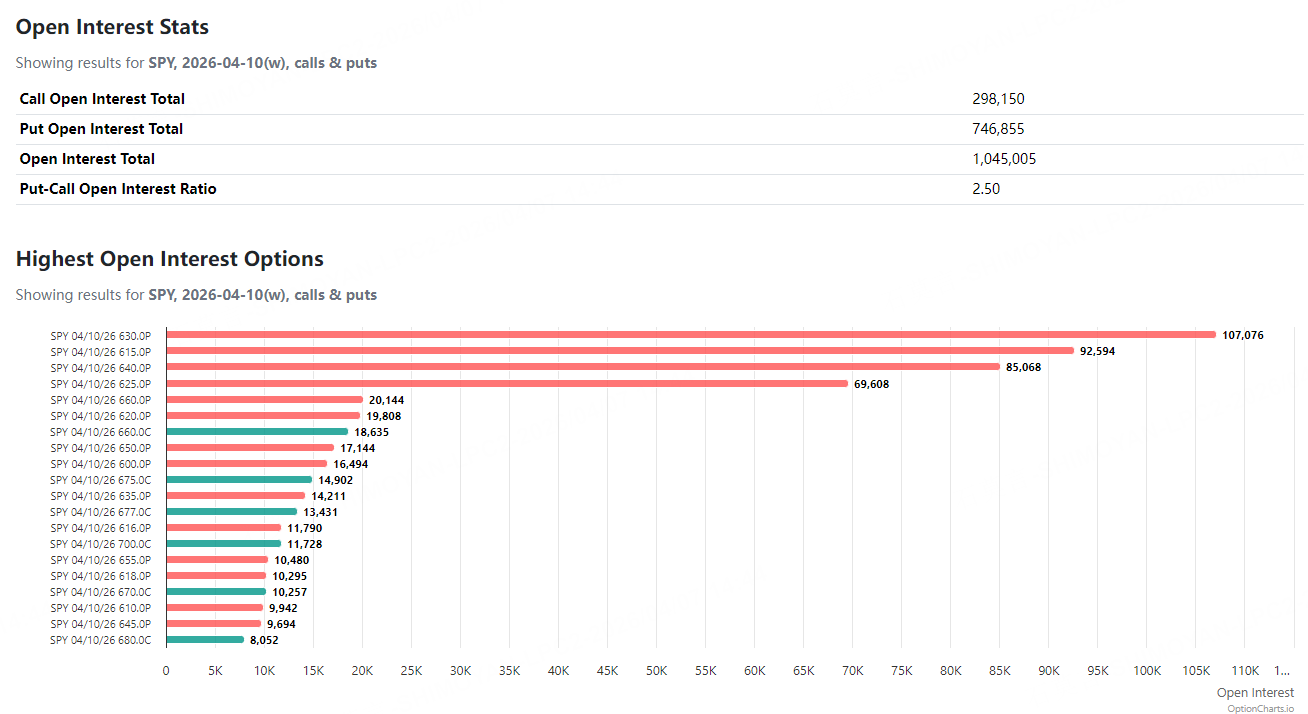
Among contracts expiring April 10 (this Friday), put options show significantly higher open interest than calls. The most concentrated open interest is clustered at strikes of 615, 630, and 640.
3. Block Trade Activity
Recent block trades point to a clear institutional positioning trend:
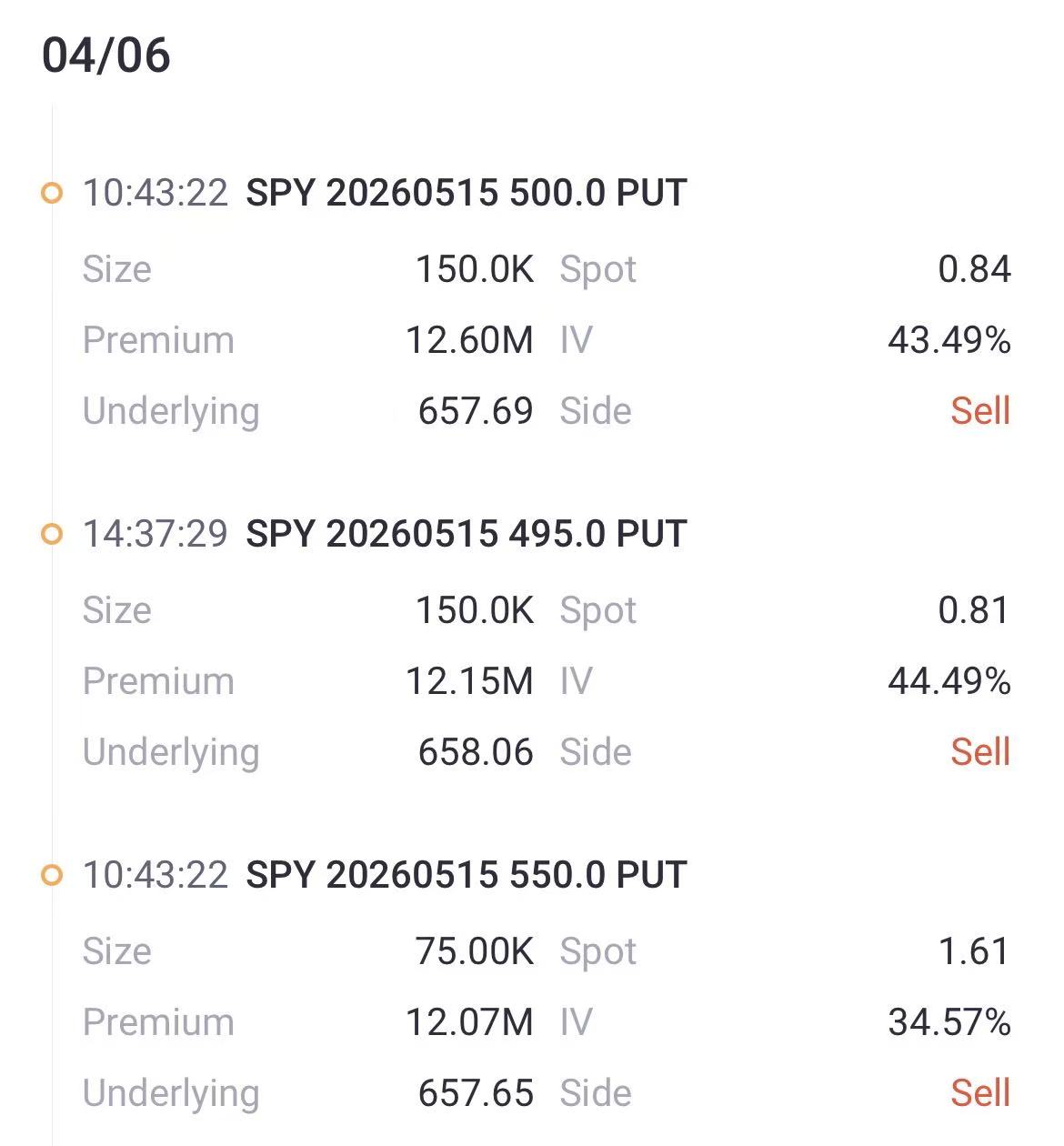
Core Strategy: Large-scale selling of deep out-of-the-money (OTM) puts
The most notable trades involve three sizable sell orders in puts expiring May 15, with strike prices of 500, 495, and 550. Each trade ranged from 75,000 to 150,000 contracts, with total notional value exceeding $12 million per trade.
Given that these strikes are far below the current price ($658.93), the positions qualify as deep OTM put selling. This is typically interpreted as a bet that SPY will not experience a sharp, disorderly decline over the next month (i.e., staying above the 500–550 range). The strategy aims to collect premium income and reflects a mildly bullish to neutral stance.
Strategy Structure: Bull Put Spread Identified
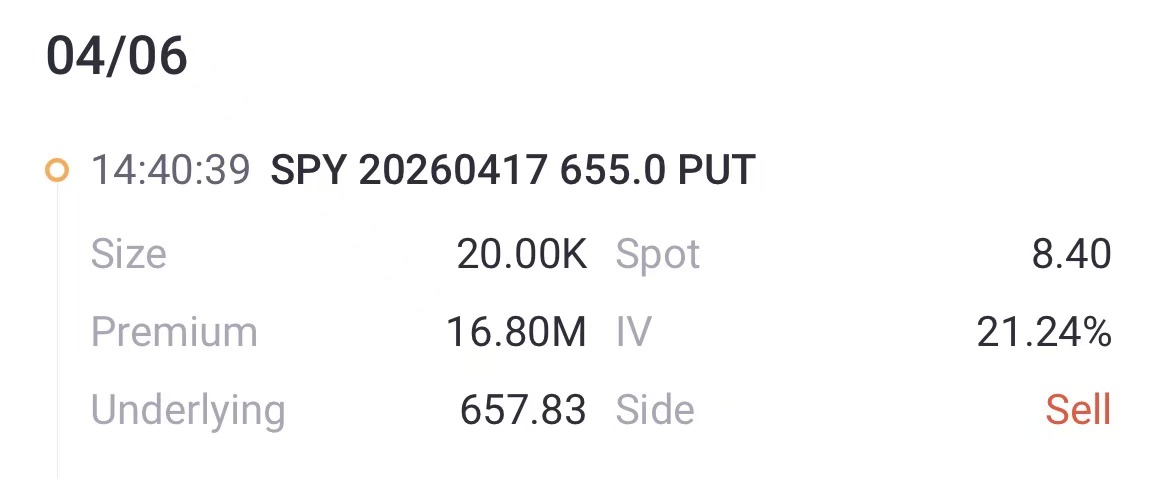
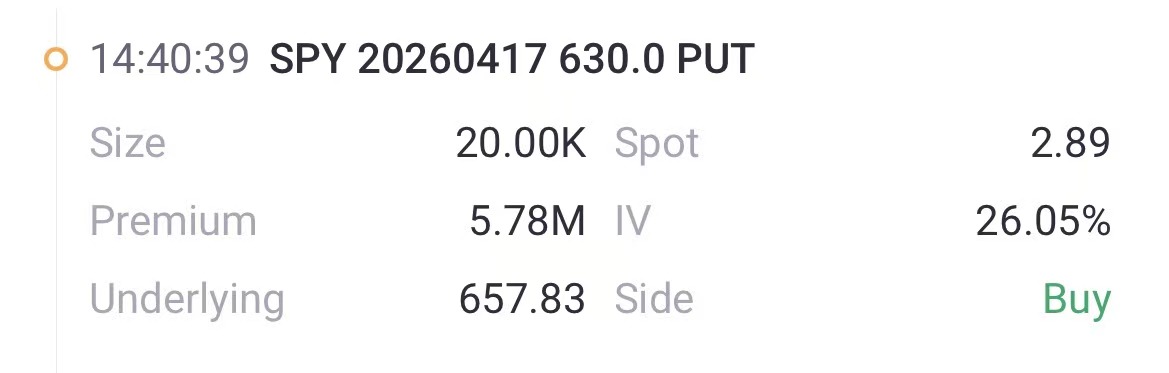
A set of synchronized trades suggests a bull put spread structure: selling the April 17 put at the 655 strike while buying the 630 strike put.
This strategy profits if prices remain stable or rise modestly, indicating expectations of sideways-to-upward movement rather than a strong rally.
$SPY Vertical 260417 630.0P/655.0P$
Strategy Takeaways
In a high-IV environment, options sellers may focus on longer-dated deep OTM puts (e.g., with delta below 0.1), where premiums are attractive and assignment probability is relatively low.
For those seeking defined risk exposure rather than selling naked options—which entails potentially unlimited downside or high margin requirements—a bull put spread (buying a lower-strike put while selling a higher-strike put) can offer a structured way to capture time decay and volatility premium while capping downside risk.
Comments