


Hong Kong stocks dropped, adding to two weeks of losses, after China’s central bank kept a key policy lending rate unchanged for a fifth straight month, killing bets among some economists on policy easing to shore up the economy.
The Hang Seng Index fell 0.6 per cent to 16,151.45 at 9.52am local time, after sliding 1.8 per cent last week. The Tech Index slumped 1.9 per cent and the Shanghai Composite Index retreated 0.2 per cent.
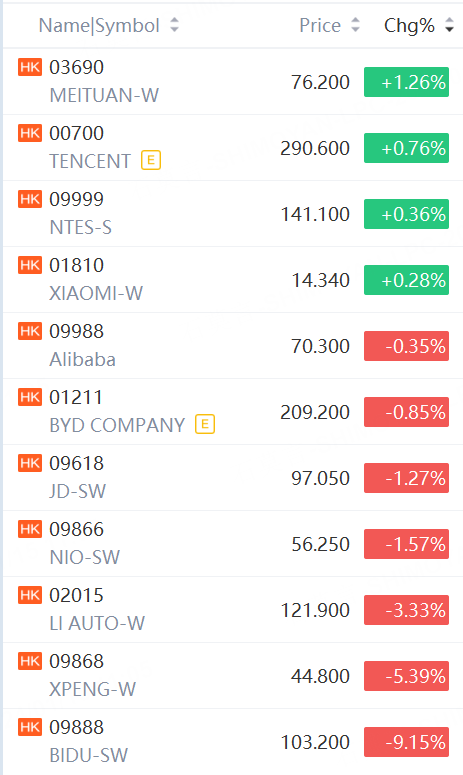
Search engine provider Baidu slumped 9.15 per cent to HK$103.20 and sportswear maker Li Ning tumbled 3.9 per cent to HK$17.26. Alibaba Group dropped 0.35 per cent to HK$70.3 and e-commerce peer JD.com slipped 1.27 per cent to HK$97.05.
The People’s Bank of China maintained its one-year policy rate on medium-term lending facilities at 2.5 per cent today, against market hopes for a cut similar to a surprise move in August. The central bank, however, injected 216 billion yuan (US$30.2 billion) into the system via the facility.
The city’s benchmark has dropped 4.7 per cent in the first two weeks of trading, marking the worst start to a year since 2016 when the benchmark fell 10 per cent over the same period. Government reports last week showed consumer prices in mainland China fell for a third month in December. Trade data failed to inspire, with exports exceeding consensus estimates and imports trailing projections.
Distressed developer Logan Group jumped 6.7 per cent to HK$0.64 after pledging to cut its debt level by as much as US$3 billion to facilitate its debt repayment. Some creditors consented to its plan to repay US$8 billion of offshore debts and a shareholder loan with cash and new securities over a nine-year period.
Tingyi Holding, which produces noodles, slipped 0.5 per cent to HK$8.57 in Hong Kong. Foxconn Industrial Internet fell 0.9 per cent to 12.73 yuan in Shanghai. In Taipei, the benchmark Taiex index climbed 0.4 per cent, following a 2.3 per cent slide last week.
Other major Asian markets were mixed. Japan’s Nikkei 225 climbed 0.6 per cent, while South Korea’s Kospi retreated 0.2 per cent and Australia’s S&P/ASX 200 was little changed.