


Summary
- Single aisle aircraft forecast exceeds pre-pandemic levels.
- Projections for wide body aircraft are still down 8% compared to pre-pandemic levels.
- The long-term trend remains directed upward.
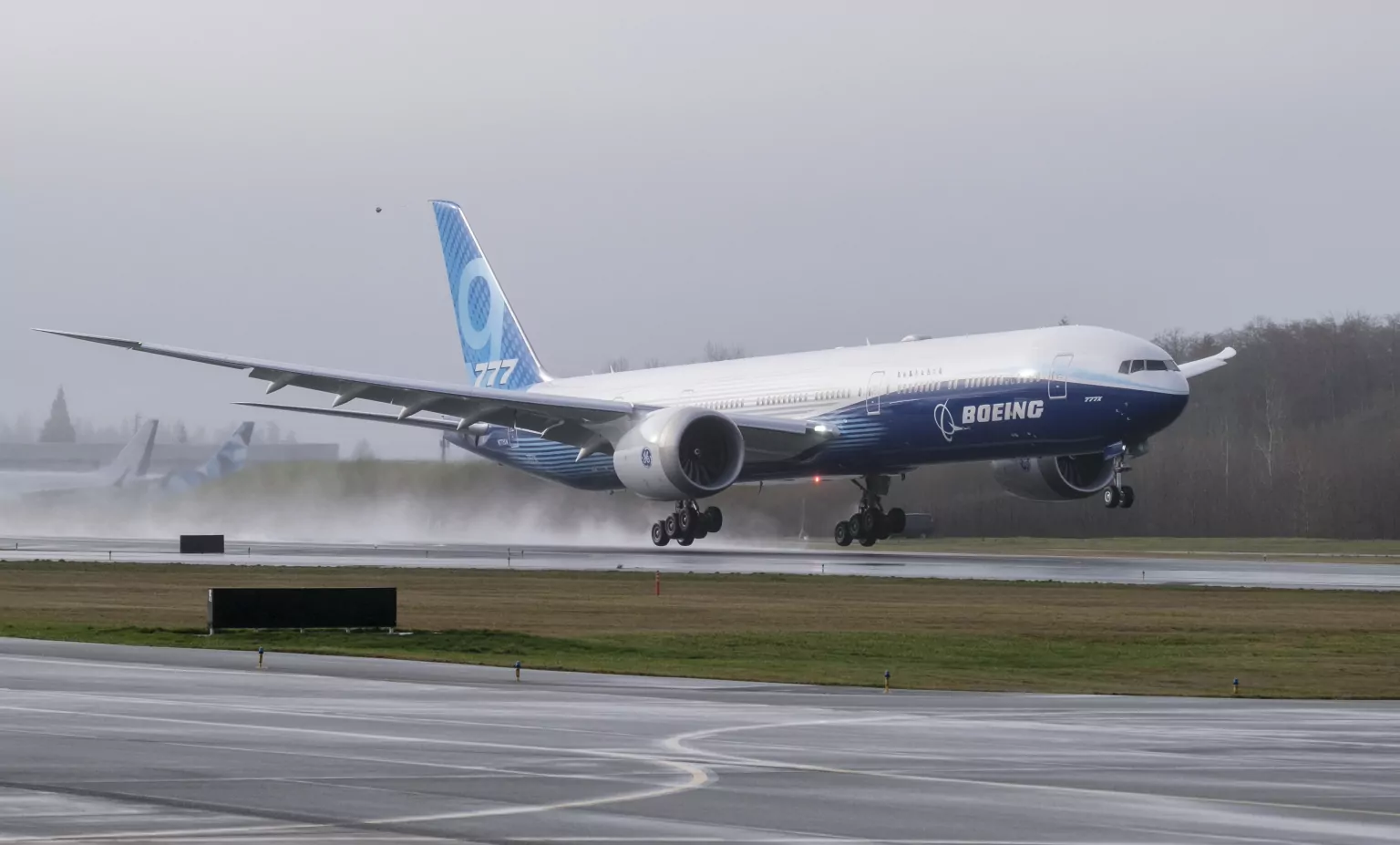
Boeing(NYSE:BA) has provided its 20-year commercial market outlook on the 14thof September. Last year Boeing provided the outlook in early October and it was extremely interesting outlook to analyze and it showed the expected impact on demand for commercial aircraft. At this time last year, airlines had tried to bring their capacities back to 50%-70% after cutting it by 90% in Q1 2020. With vaccines rolled out, there has been some optimism regarding the pace of the recovery though revenue passenger-kilometers are still expected to be down around 60% in 2021.
So, with the new projections available it's interesting to see how the realities of RPKs still being down around 60%, but with vaccinations programs underway, affects the projections for aircraft deliveries. The commercial market outlooks always contain a lot of information, so it's likely we will be spending numerous reports on this subject. In this report, we will focus on several subjects in particular. Those are the demand profile by aircraft body type and how those have changed with respect to last year in the 20-year frame. Additionally, we also will be considering to the 10-year frame as it gives an idea whether progress has been made such that projections are trending up again for the 10-year period.
Boeing expects equal weight value recovery

Figure 1 provides a tiny bit of context on how the 20-year forecast has developed since last year. Overall, the outlook has increased by 500 units from 43,110 expected deliveries to 43,610. That number is still down 430 units from the 2019 CMO, which we consider a baseline that Boeing and the industry would want to return to. So, what does the number mean? With over half of the decline compared to the baseline being recaptured in this year’s outlook, Boeing seems to be expecting a very fast market recovery for aircraft.
Late 2024 is what Cirium, a data analytics provider for the aviation industry, is using as their baseline, and Boeing seems to be expecting a stronger recovery that's in line with expectations from IATA. Following the path from small aircraft to bigger aircraft, Boeing expects the recovery to be completed by 2023-2024. So, Boeing is expecting the recovery to take at least a year less.

With that assumption comes a downward revision of 40 units for regional jet deliveries. The longer the recovery takes, the more prominent the role of the regional jets would be. While Boeing’s assumptions on the recovery have not changed drastically, it seems that optimism on the recovery trajectory goes at the expense of regional jet forecasts as using bigger planes might becoming more compelling once again. Single aisle delivery forecasts were hiked by 390 units covering nearly 80% of the hike compared to last year. It seems like a huge deal, but one should consider that on monthly production levels it equates to slightly more than 1.5 aircraft, and assuming a perfect split between Boeing and Airbus which is optimistic this would mean that new projections support the delivery of roughly one additional single aisle jet per month. So, a big increase in absolute numbers but in relative sense it is very small around 1%. What's more interesting is that the outlook for single aisle aircraft already is above the 2019 levels.
More interesting to look at is what happened to wide body projections. Last year the projections for wide body aircraft deliveries were dropped by 10%. This year, it is up by 190 units. Given that a widebody aircraft sells for 2-3 times the value of a single aisle jet, we can conclude that in terms of value the wide body passenger aircraft and single aisle aircraft have equal contributions to the hiked forecast but wide body deliveries remain down 8% from the baseline. What also should be considered is that around 360 aircraft wide body aircraft have been retired early according to our own research. With that in mind, one would have hoped for a stronger hike in the expected wide body deliveries. So, the wide body market is really showing that full recovery is still going to take a while but it should also be mentioned that the current projections leave a lot of room for increases in production rates on the wide body programs.
For the wide body freighter market, the forecast was reduced by 40 units year-over-year and that's interesting because worldwide we're seeing issues with logistics. But it seems that the dedicated freighter market is not expected to benefit over the longer term. There are two explanations for that. The first one is that as international wide body traffic recovers, belly cargo capacity will come online again, and the second explanation is that some passenger aircraft have been converted for freighter services permanently. So, Boeing’s strength in the converted freighter market is biting the company back in the dedicated freighter market.
Boeing's delivery profile remains backloaded

What remains interesting to highlight are the 10-year delivery outlooks. The baseline 10-year outlook has not been specified by Boeing but the airline did say that the 18,350 aircraft deliveries expected over a decade were down 11% compared to the baseline which led to our conclusion that the pandemic will be resulting in a 11% adverse impact over a decade, which is substantial. This year, Boeing expects the 10-year delivery numbers to total 19,330 units marking a 5% increase driven by higher single aisle deliveries (+800) and higher wide body deliveries (+180). Those numbers were expected to be better, signaling the recovery in production and delivery rates with an important role for the Boeing 737 MAX production and delivery ramp and a release of wide body aircraft from inventory. So, the 10-year rolling number improving is not so much related to turning more bullish on the recovery but more that a year with low delivery volumes (last year) disappearing from the rolling number and a year with more deliveries replacing it. So, we cannot say that recovery is accelerating beyond what was earlier thought. Thisalso isdemonstrated by the rise in the 10-year forecasts being 980 units vs. a 500 unit hike in the 20-year forecast.
So, the numbers are moving in the positive direction. However, what we also have observed is that the delivery profile remains backloaded. In 2019, around 47% of the deliveries were expected in the first half of the 20-year outlook and in 2020 this reduced to 43% only to bump up modestly to 44% in the most recent outlook. Freighters and regional jets are the exception to that trend as reduced demand in the near term somewhat has strengthened the use case for regional jets and the disappearance of belly capacity on wide body aircraft vanished when international passenger transport was reduced significantly, resulting in an uptick in demand for freighter aircraft. While Boeing has had its fair share of headwinds over the past years, the backlog which is visualized in the TAF Boeing Backlog Monitor shows that the jet maker has thousands of aircraft in the order books and more to come in the coming years.
Conclusion
What we're seeing is that Boeing is expecting a return to pre-pandemic conditions roughly a year earlier than some data analytics companies and possibly that's also what Michael O’Leary from Ryanair hinted on when he said he did not share Boeing’s optimistic pricing scenario which without doubt is related to forecast demand. What's most striking to me in the CMO is that wide body demand forecasts are still at a level where I would say investing in Boeing as well Airbus is a no-brainer. Boeing’s forecasts tend to be conservative, so in my view while I'm often critical on Being I do think that for long-term investors there's a lot of reason to invest or remain invested in Boeing as well as Airbus.
While it seems that Boeing is more positive about the future, it should be noted that the 20-year outlooks are rolling numbers so last year was a year with lower deliveries and in this year’s outlook that year is obviously replaced with a production year 19 years from now when production is expected to be good. So, it's very important to keep in mind that higher anticipated deliveries are not necessarily an indication that recovery timelines have accelerated. However, what the numbers in my view do show is that the commercial aircraft industry is very resilient and for Boeing the art will be to capitalize on the long-term trend and resilience by developing appropriate products.