


How to play Alibaba's financial report? Consider a wide span
Alibaba will release its financial report before the market opens on February 20, Eastern Time. The market expects Alibaba to achieve revenue of 278.927 billion yuan in Q3 2025, a year-on-year increase of 7.14%; The expected earnings per share are 15.90 yuan, a year-on-year increase of 181.36%.
Recently, with the rise of DeepSeek and the optimism of more and more institutions, Chinese assets have exploded. Since the beginning of this year, Alibaba's stock price has been particularly eye-catching. Recently, it has been stimulated by multiple good news, including cooperation with Apple, the new AI model Qwen2.5Maxx, and its products connected to the DeepSeek series model. It is reported that, boosted by the benefits of AI, Ali's valuation should shift from value to growth. Compared with overseas leading cloud vendors, there is huge room for improvement in its valuation.
Looking ahead to this quarterly results, investors willFocus on the growth rate of e-commerce GMV and CMR, cloud business profits, international industry revenue, and divestiture of non-core assets.
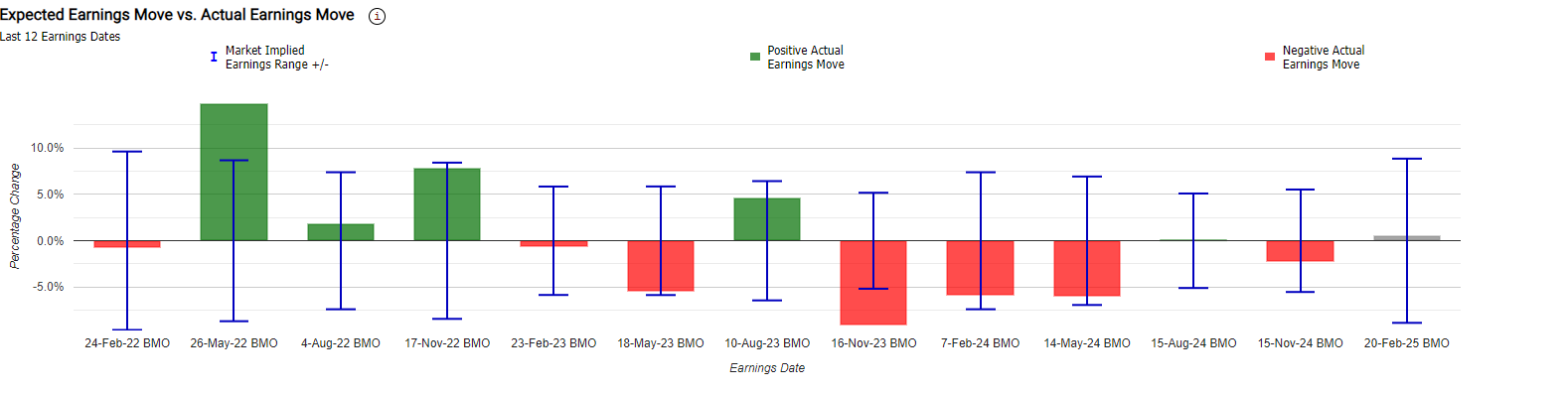
How did stock prices perform in previous earnings seasons?
Currently, Alibaba's implied change is ± 8. 9%, indicating that the options market has bet on its single-day rise and fall of 8.9% after its performance; In comparison, Alibaba's average post-performance stock price change in the first four quarters was ± 3. 5%, indicating that the current option value of the stock is overvalued.
What is the wide straddle strategy
In long wide straddle options, investors buy both out-of-the-money call options and out-of-the-money put options. The strike price of a call option is higher than the current market price of the underlying asset, while the strike price of a put option is lower than the market price of the underlying asset. This strategy has significant profit potential because the call option theoretically has unlimited upside if the price of the underlying asset rises, while the put option can make a profit if the price of the underlying asset falls. The risk of the trade is limited to the premium paid for these two options.
An investor shorting a wide straddle sells an out-of-the-money put and an out-of-the-money call at the same time. This approach is a neutral strategy with limited profit potential. Shorting a wide straddle option is profitable when the underlying stock price is trading within a narrow range between break-even points. The maximum profit is equal to the premium obtained by selling two options minus the transaction cost.
Alibaba's short-selling wide straddle strategy case
Stock Alibaba is currently trading at $128.75. Investors can implement the short wide straddle strategy by:
Sell a call option with a strike price of $140, and premium is $143.
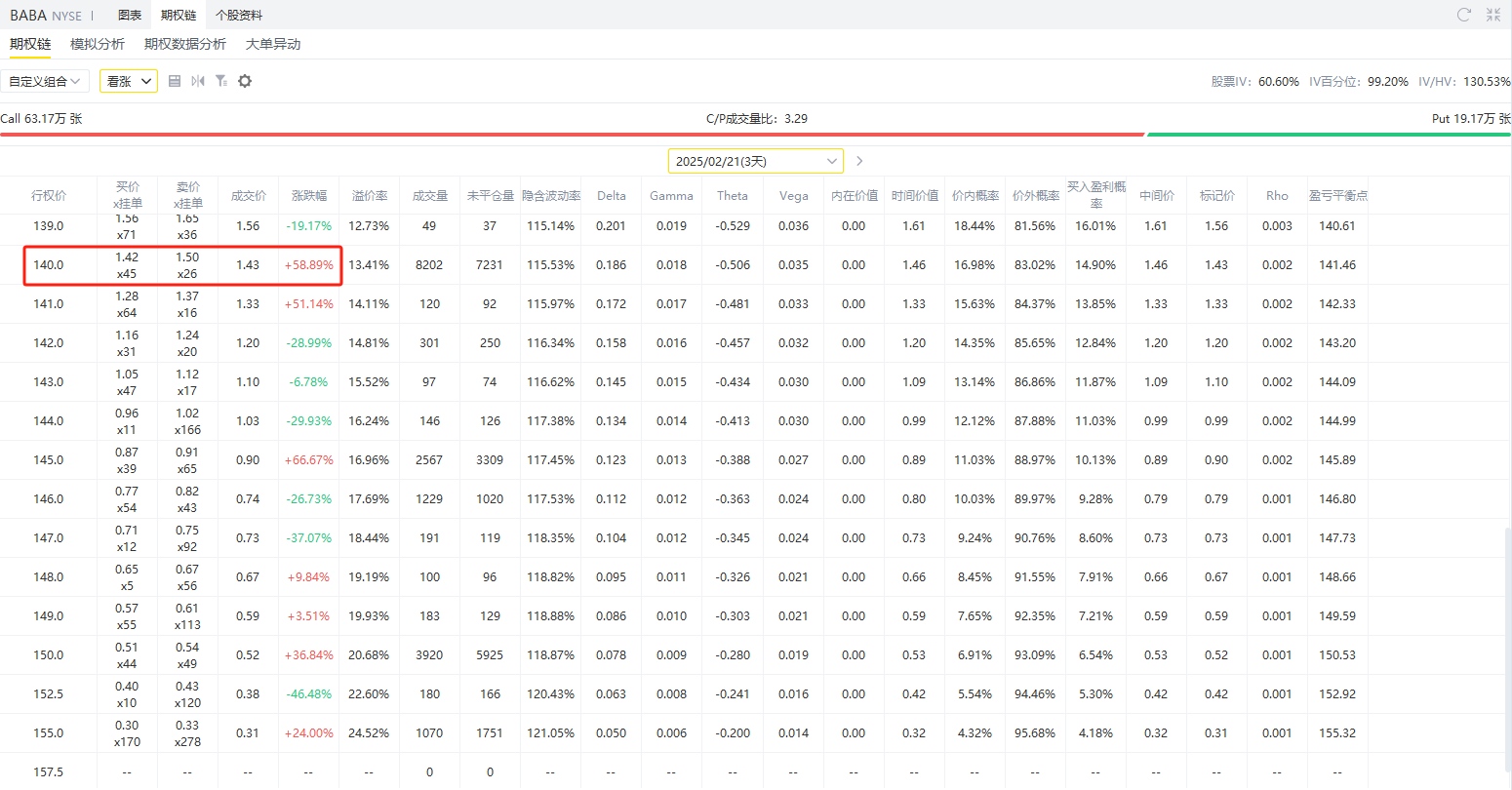
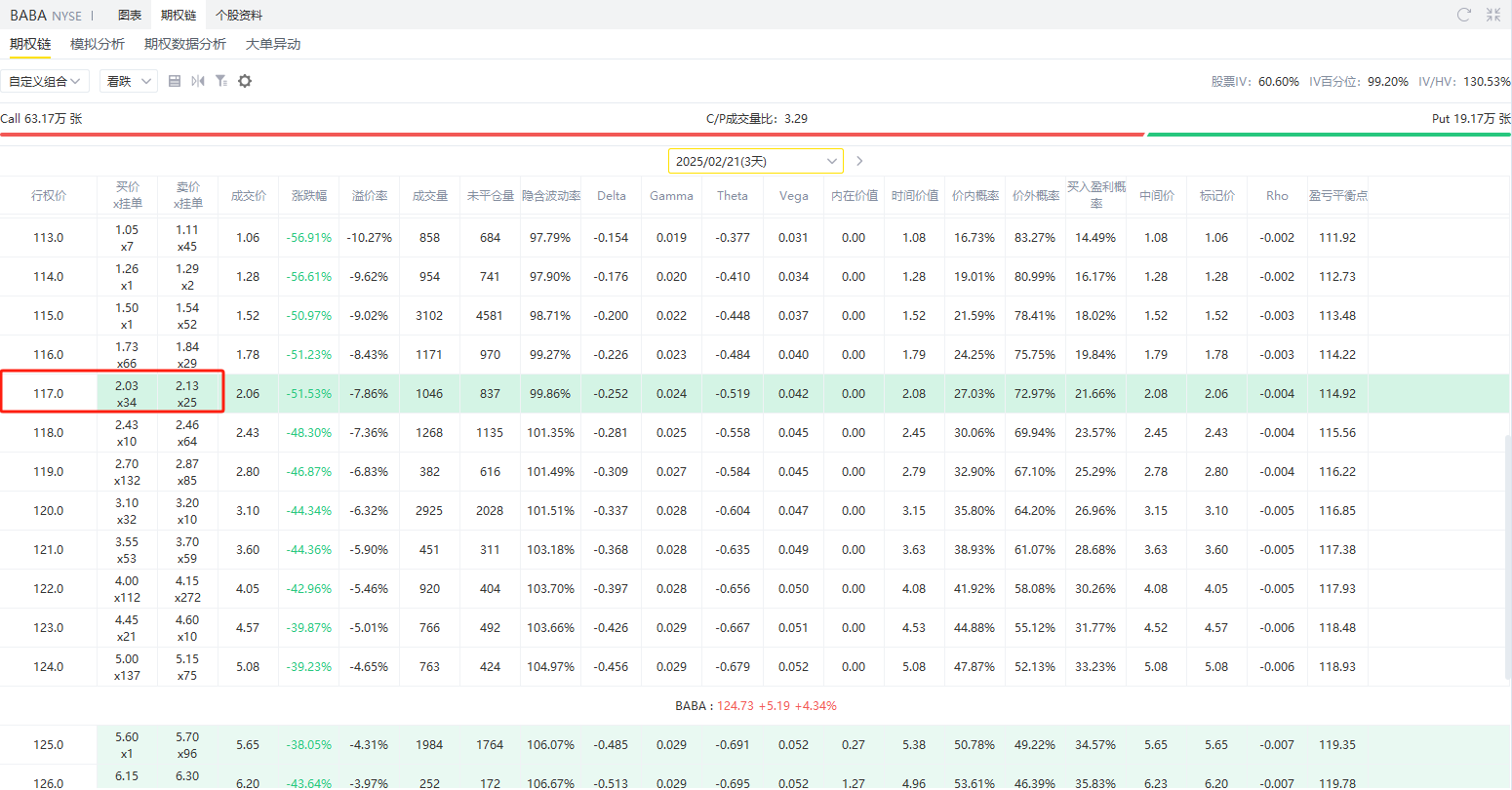
Sell a put option with a strike price of $117, and premium is $206.
Target Price: $128.75
Sell 140 Strike Call: Collect $143 premium
Sell 117 Strike Put: Collect $206 premium
Total premium Revenue = $$143 + $$206 = $349
Maximum profit: Total premium received $349 (if the stock price is between $117 and $140 at expiration, both options will be voided)
Maximum loss: Ideally unlimited (stock price well over $140) or stock price drops to zero (stock price well below $117)
Analysis of profit and loss
Maximum profit: $349
Occurs when the stock price closes between $117-$140, neither option is worthless and the investor retains full premium.
Break-even point:
Upper breakeven point: $140 + $3.49 = $143.49
Breakeven below: $117-$3.49 = $113.51
Loss:
The stock price is higher than $143.49: The strategy starts to lose money, and the potential loss is unlimited (because the naked put option was sold).
Stock price below $113.51: The strategy starts losing money, with the largest loss occurring when the stock price falls to zero ($113.51-$117 =-$3.49, $113.51 loss per share).
Disclaimer: Investing carries risk. This is not financial advice. The above content should not be regarded as an offer, recommendation, or solicitation on acquiring or disposing of any financial products, any associated discussions, comments, or posts by author or other users should not be considered as such either. It is solely for general information purpose only, which does not consider your own investment objectives, financial situations or needs. TTM assumes no responsibility or warranty for the accuracy and completeness of the information, investors should do their own research and may seek professional advice before investing.
