


The drop feels a bit inexplicable. After some consideration, two things seem related:
The effective date of the Mexico-Canada tariffs is March 4, which is next week.
According to historical data, the S&P 500 index generally performs poorly in February during the first year of a presidential term.
However, both factors probably share the same underlying cause.
$NVIDIA(NVDA)$
The drop is quite inexplicable, wiping out the newly opened bullish options positions this week, leaving no chance for cashing out.
However, this is now an excellent selling opportunity. Last week, volatility was too low, and even after three consecutive days of declines, implied volatility has risen to 120%.
I already have a position, so I won’t make any further moves.
There’s no substantial bearish news on the fundamentals. The earnings outlook is better than 60 days ago due to confirmed demand for Hopper, and GB200 has shown progress. Earnings are likely to exceed January’s expectations and align with the consensus expectations for April.
Morgan Stanley analysts expect the company’s Q1 revenue guidance of $37.5 billion to increase by $2-2.5 billion.
Based on a stock price of $139:
Bullish case: Prices have a 3-15% upside potential.
Bearish case: Prices have a 5-10% downside risk.
Therefore, a pre-earnings decline isn’t necessarily a bad thing. The downside risk has now been eliminated unless a particularly severe black swan emerges. In that case, a sharp drop would only lead to an even stronger rebound.
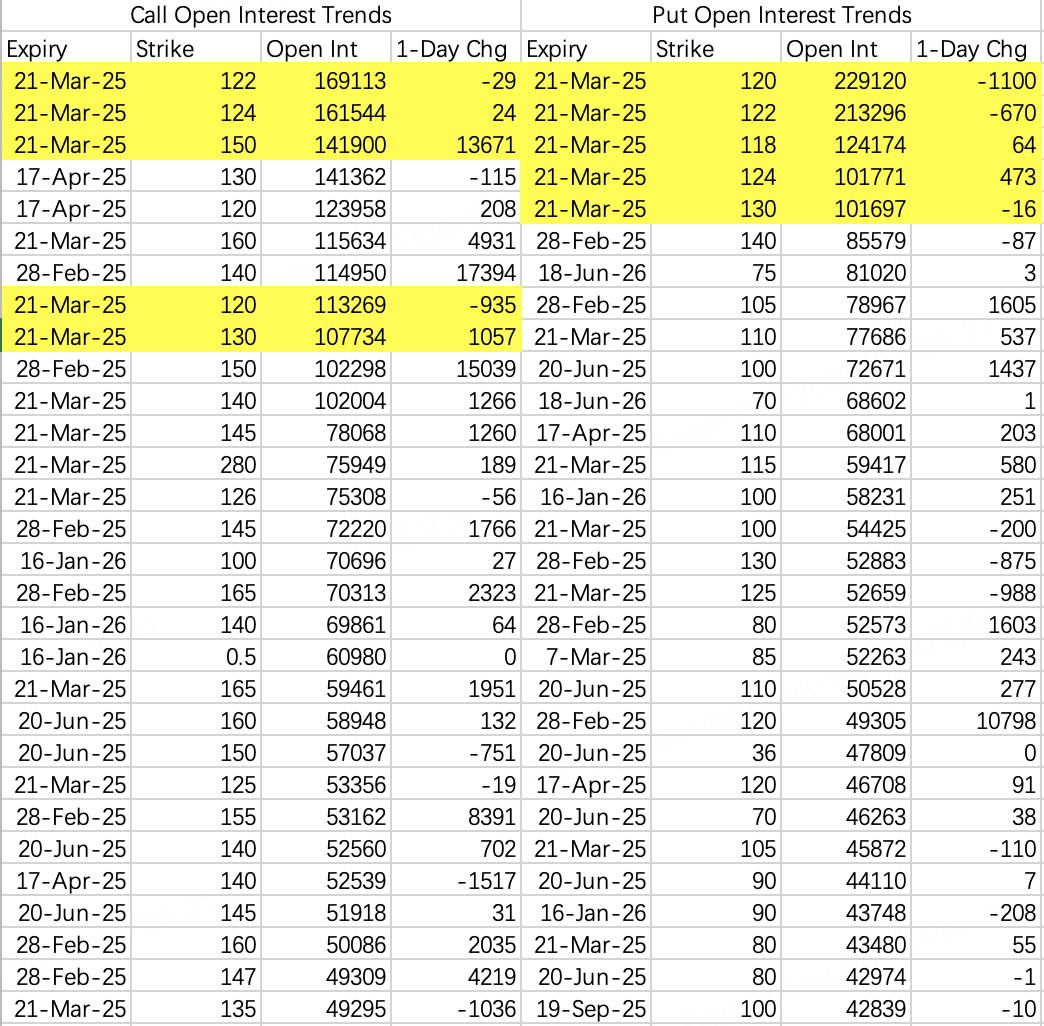
Institutions have set a sell call cap at $145 or $148, and hedging is high between $157.5–165, which is significantly higher than last week. This suggests institutions do not expect bad earnings reports.

However, prices much higher than this are unlikely. For this quarter, the stock price seems capped at $150.
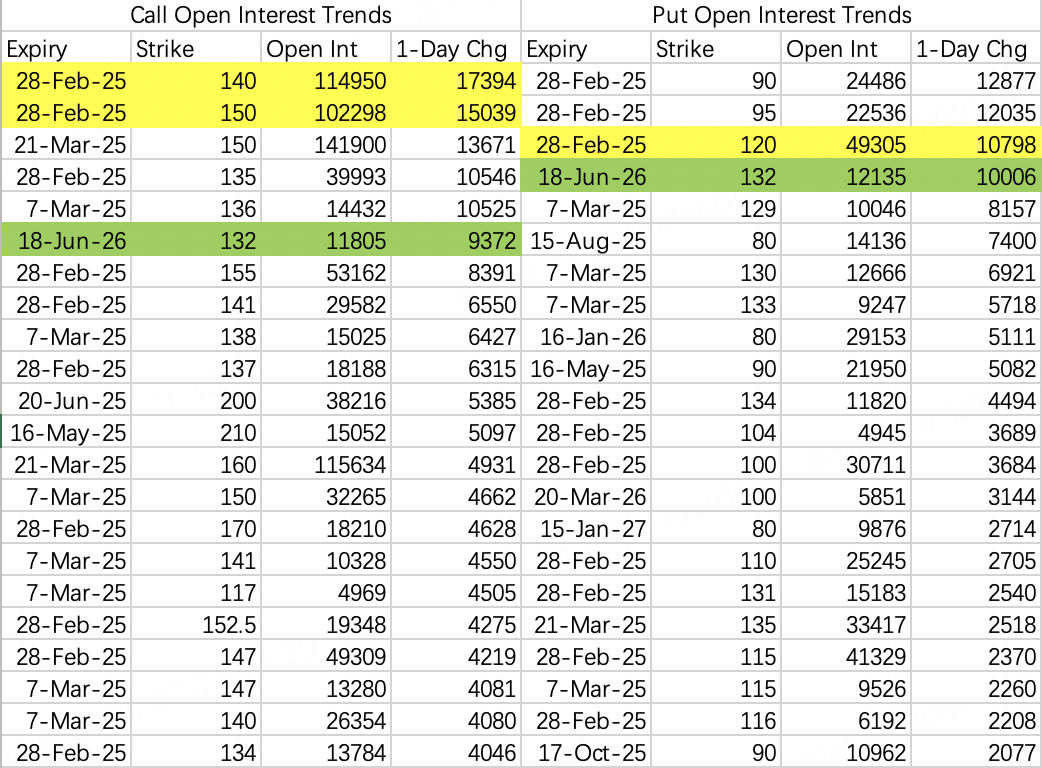
What’s more important is how the stock moves post-earnings. It may not break $150 after earnings but instead continue to trade sideways like in the past two months. Most of the time, the price may remain between $130–140, occasionally breaking $140 or dipping to $120.
$Tesla Motors(TSLA)$
Tesla can be considered the primary victim of the tariffs. To determine when to bottom-fish, keep an eye on when the large position $TSLA 20250620 370.0 PUT$ is closed.

$KraneShares CSI China Internet ETF(KWEB)$
The options positions indicate that the bulls have shifted their target to after March and are not very interested in this week. Bearish activity is more prominent for options expiring this week. The most notable volume increase is in the 33 put.
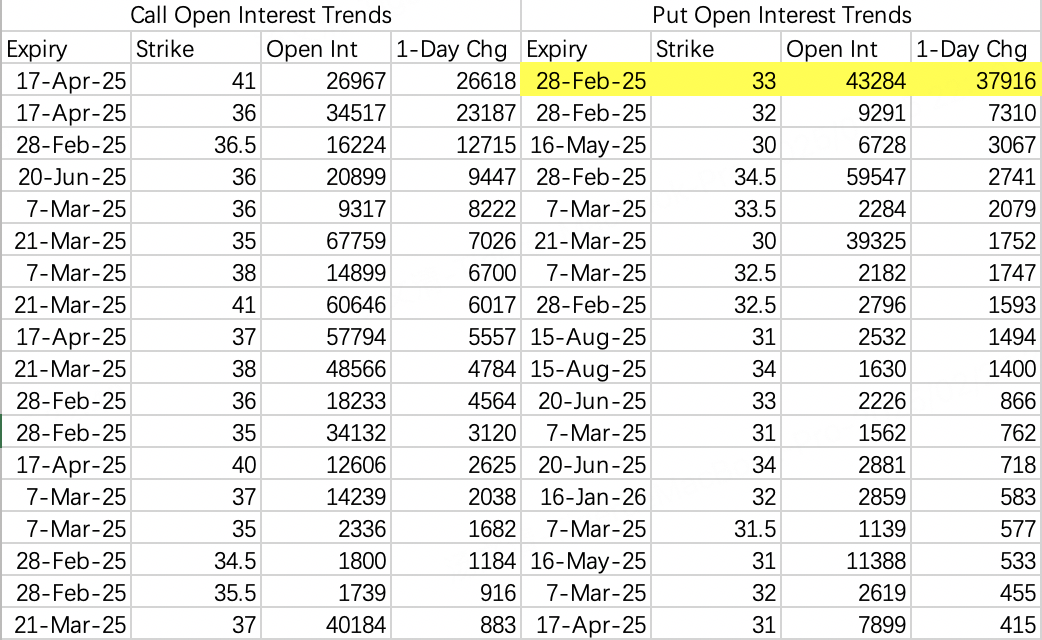
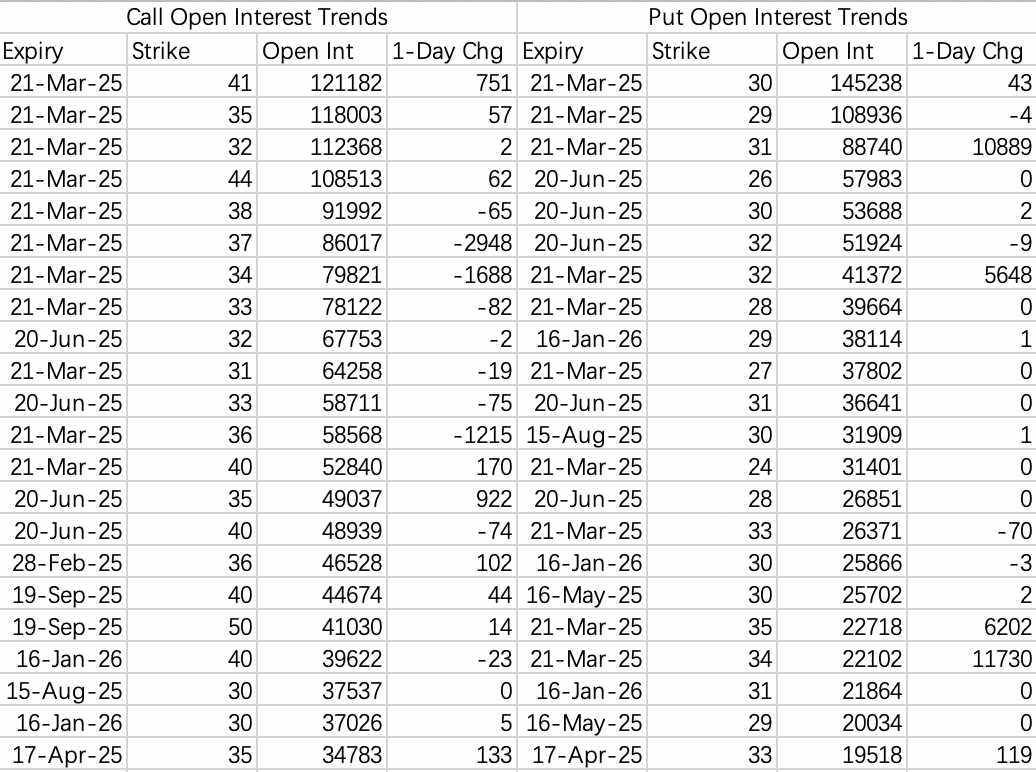
For the overall open interest, the head data is concentrated on options expiring in March, and the end of March is an important turning point.
$iShares China Large-Cap ETF(FXI)$
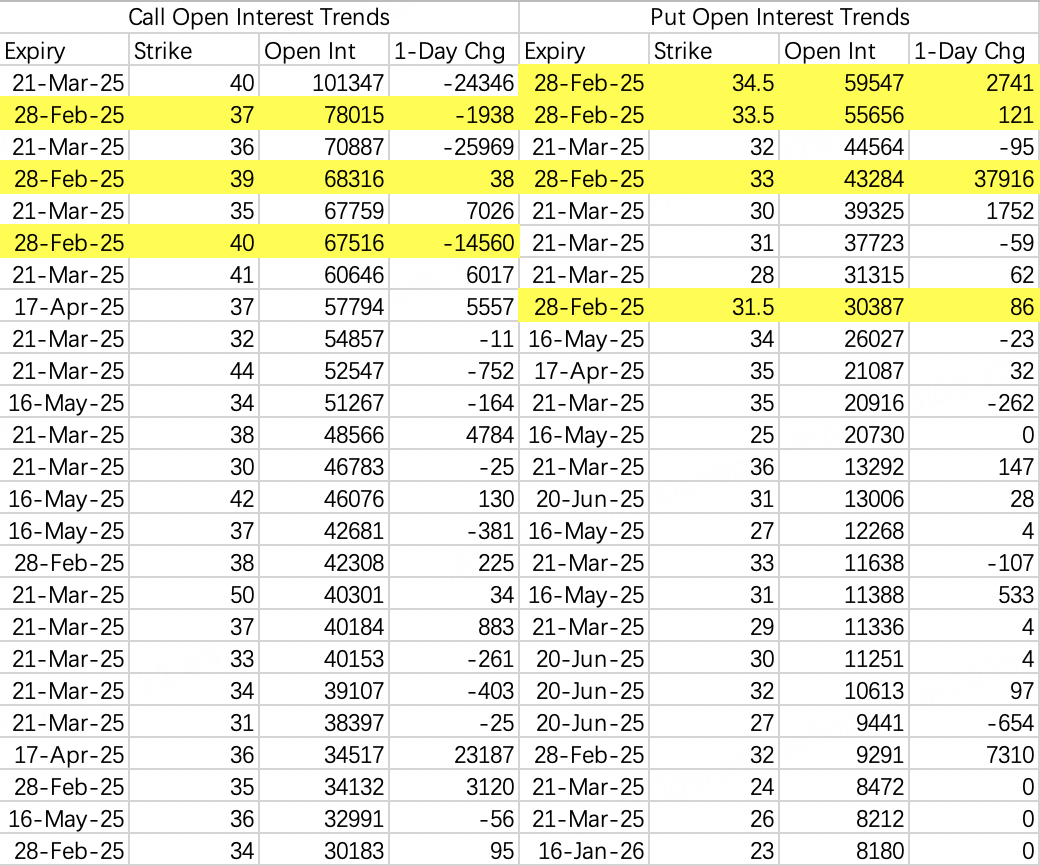
The FXI options positions are similar, with most of the activity focused on long-term positions. Long-term sentiment remains bullish.
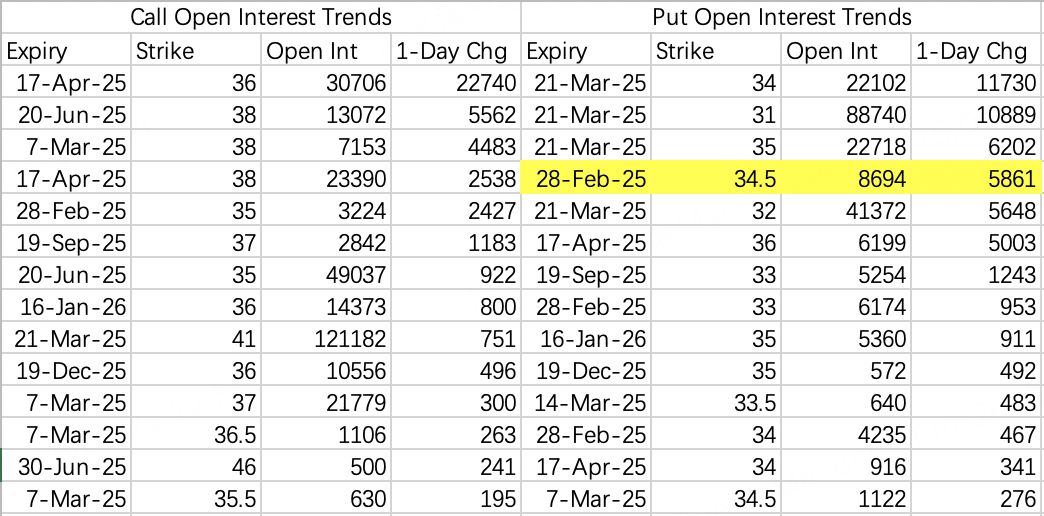
The overall open interest situation is the same as KWEB, with the end of March serving as a critical juncture.
Disclaimer: Investing carries risk. This is not financial advice. The above content should not be regarded as an offer, recommendation, or solicitation on acquiring or disposing of any financial products, any associated discussions, comments, or posts by author or other users should not be considered as such either. It is solely for general information purpose only, which does not consider your own investment objectives, financial situations or needs. TTM assumes no responsibility or warranty for the accuracy and completeness of the information, investors should do their own research and may seek professional advice before investing.
