


Banking on Cockroaches: Q3 Resilience with Hidden Hitches
Bank earnings season: The Big Four U.S. banks kicking off on October 14— $JPMorgan Chase(JPM)$ $Citigroup(C)$ $Goldman Sachs(GS)$ $Wells Fargo(WFC)$ —released their third-quarter earnings reports and delivered intriguing signals during subsequent earnings calls. Overall, performance generally exceeded market expectations, with investment banking showing clear signs of recovery. However, management consistently conveyed a tone of "measured recovery and cautious progress."
1. JPMorgan (JPM): The Calm and First Move Behind the "Cockroach Theory"
One-sentence conclusion: Stable interest rate spreads, investment banking recovery, and "hawkish" fee trends are anchoring market expectations ahead of the strong cyclical phase.
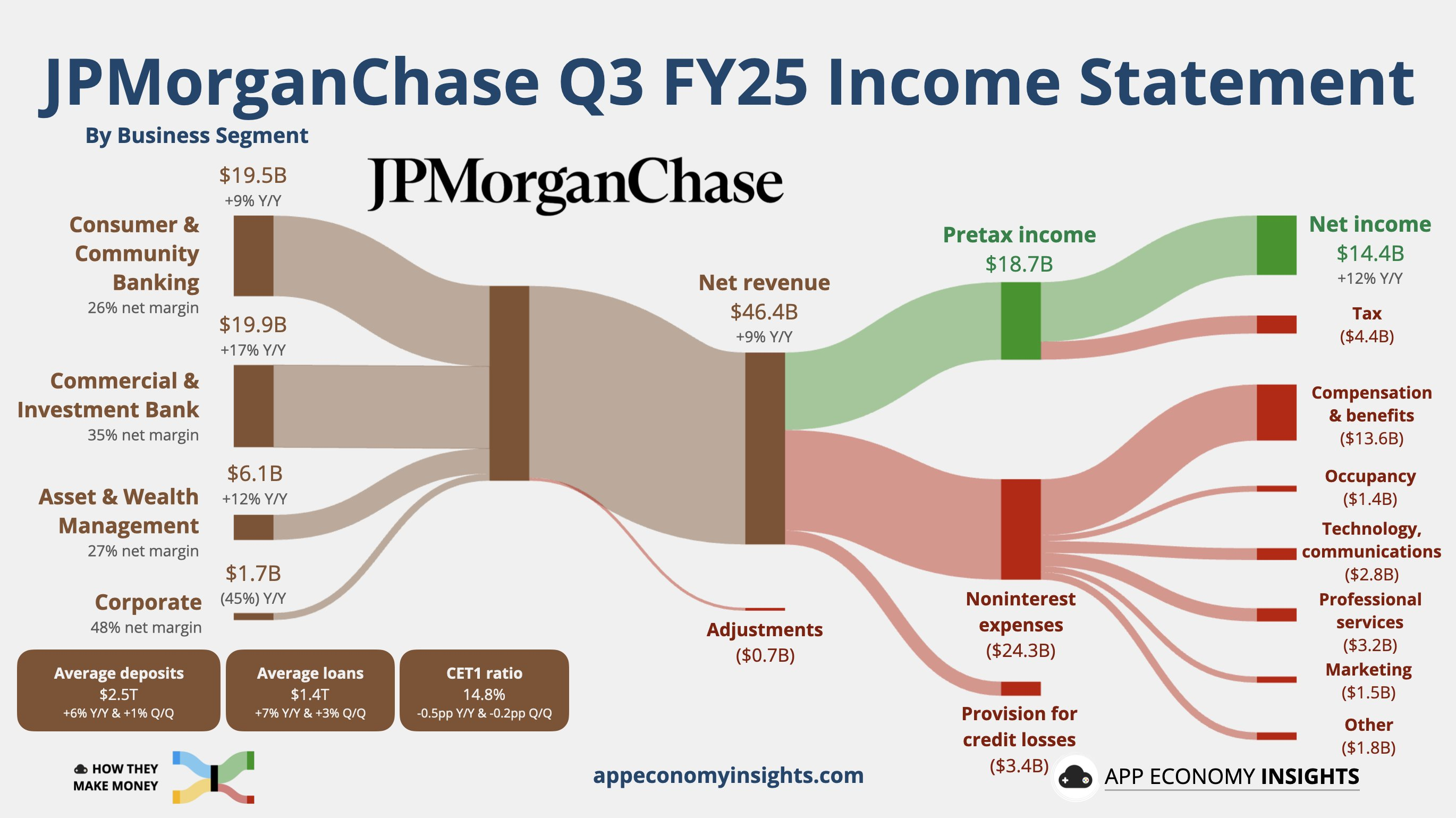
Forward guidance demonstrates rare confidence. The company unusually provided advance guidance for 2026 core net interest income (NII) of approximately $95 billion, reflecting growth certainty even after excluding market operations. This move, amid rising expectations for a rate-cutting cycle, signals confidence while also serving as a classic exercise in "expectation management," anchoring market expectations.
Cost Outlook Leans Hawkish as Management Rejects 'Market Pleasing'. CFO bluntly stated that the market-anticipated $100 billion in expenses "seems too low." Rising labor and healthcare costs, along with talent competition pressures, are viewed as the "new normal." Jamie Dimon emphasized that long-term competitiveness won't be sacrificed for short-term profits.
JPMorgan adopts a "realistic" approach to AI—viewing it as a productivity tool rather than a cost-cutting myth. Management explicitly states that AI enables them to better enforce cost discipline, not to "replace people."
Risk Warning: Non-Bank Financial Institutions (NBFI) Are Potential "Black Holes". Dimon warned the market with his "cockroach theory": Though the Tricolor fraud case is small, it reveals the latent credit risks within non-bank financial institutions. While the current credit environment remains healthy, should the economy weaken, the fragility of NBFI could amplify systemic risks.
Investment banking has seen a return of "animal spirits." Investment banking fee income rose 16% year-over-year, with equity financing revenue surging 33% and M&A pipelines showing clear recovery. Dimon stated that the market's "animal spirits are reviving."
Consumer resilience remains intact, but management remains vigilant. Credit card delinquency rates are lower than expected, and Sapphire new account openings hit record highs, indicating retail stability persists. However, management frequently cautions about potential labor market weakness.
Regulatory and capital strategies are becoming more proactive. The bank maintains an optimistic outlook on the final version of Basel III, viewing regulatory developments as moving toward rationalization. With a CET1 ratio of 14.8%, the company states it will "launch a comprehensive offensive," prioritizing capital to support real economy lending and industrial investment.
JPMorgan once again demonstrated its ability to manage expectations amid complex market cycles. Its combination of "hawkish spending, prudent AI deployment, and forward-looking net interest income guidance" reflects both long-term strategic discipline and cyclical foresight. In the short term, share prices may face pressure from fee-related guidance; however, its capital discipline and business structure advantages will underpin robust growth prospects over the medium term.
Citi: Fundamentals Improving, but Restructuring Still in Progress
Bottom line: Operating performance is commendable after excluding the one-time loss from Banamex, but the strategic restructuring has yet to be fully implemented.
Investment banking operations have shown a significant rebound. Investment banking fees improved substantially quarter-over-quarter, with transaction division profits recovering on the back of robust M&A and capital markets activity.
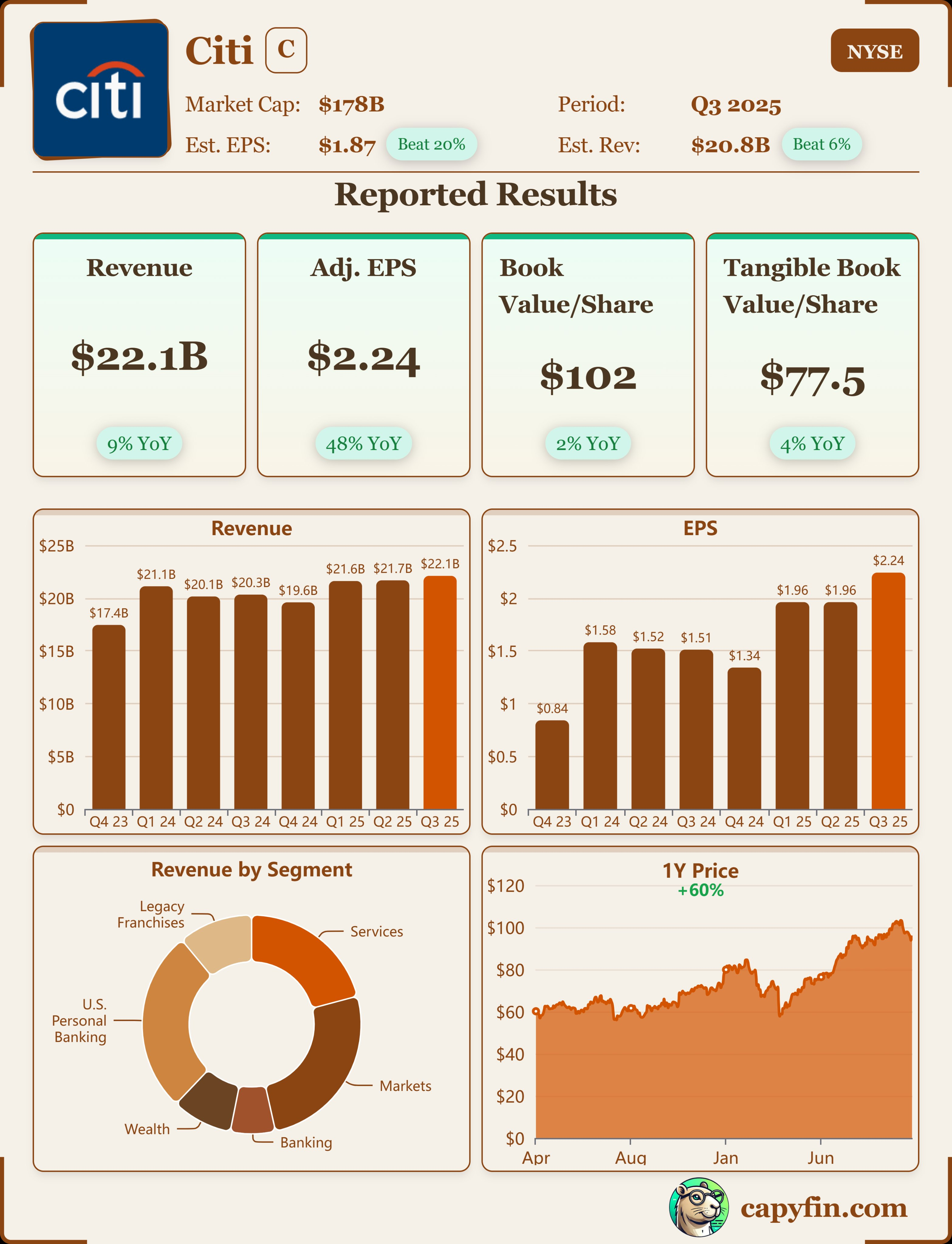
The disposal of Banamex created short-term noise. This quarter recorded a $726 million loss from the sale of a 25% stake in Banamex, depressing GAAP net profit to approximately $3.8 billion; however, adjusted EPS of about $2.24 significantly exceeded expectations.
Cost control remains the primary focus. Management reiterated its strategy of "streamlining and exiting non-core markets," with overall expenditures expected to decline again next year.
Retail and credit card growth remains steady. North American consumer finance revenue increased, with penetration rates rising for mid-to-high-end credit cards.
Citigroup's earnings report once again underscores the pattern of "stable core operations amid multiple non-core disruptions." Should the successful completion of Banamex's IPO or its full divestiture materialize, the quality of its earnings will become clearer. However, with its return on equity still trailing industry peers, valuation recovery requires stronger performance to gain traction.
Goldman Sachs: The King of Investment Banking Returns, AI Transformation Adds a Footnote
Bottom line: With dual-engine growth from investment banking and asset management, Goldman Sachs has rediscovered its "profit resilience."
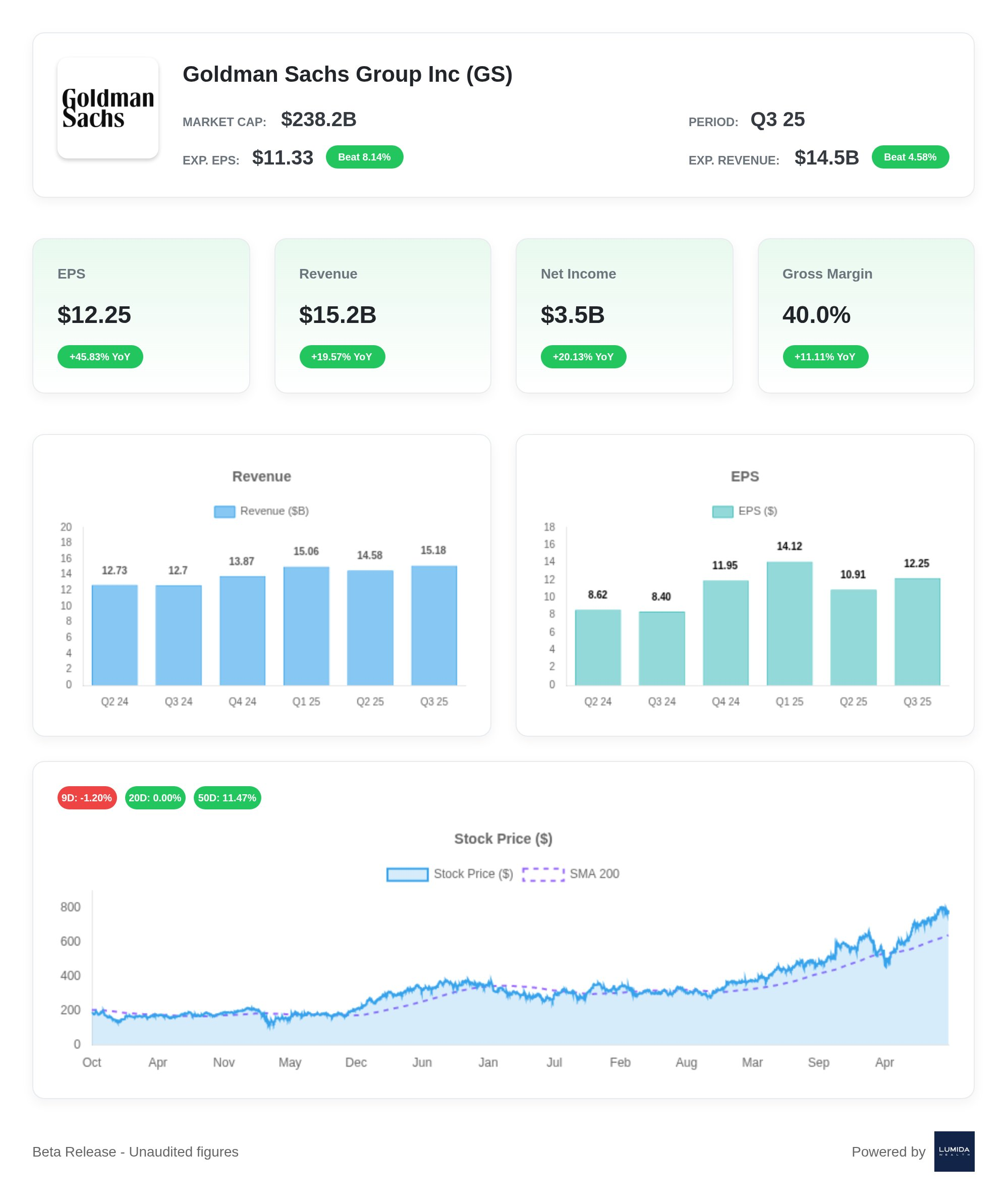
Strong performance. Q3 net revenue reached $15.18 billion, with net profit of $4.1 billion, EPS hitting $12.25, and ROE rising to 14.2%.
Investment banking operations have rebounded strongly. Equity capital markets (ECM) and M&A activity have picked up, with underwriting revenues surging following the reopening of the IPO market. Management stated that "the backlog of M&A demand has yet to be fully released," anticipating continued strength in Q4.
Asset management delivered outstanding performance. Fair value gains in private equity and fixed income portfolios contributed to performance resilience.
AI and cost optimization take center stage. CEO David Solomon emphasized that AI can enhance efficiency in investment banking, risk management, and asset management; the company is restructuring its middle and back offices to align with AI infrastructure. Industry sources indicate some "talent restructuring," interpreted by the market as "the initial implementation of AI replacements."
As a pure beneficiary of capital market cycles, GS typically surges first during early recovery phases. If AI integration with labor efficiency reforms progresses steadily, it could improve the rigid cost structure that has persisted over recent years. However, the firm remains highly sensitive to market cycles and exhibits significant volatility.
Wells Fargo: A New Phase of Growth Following the Removal of Asset Caps
Bottom line: With the spread recovery and declining credit costs, WFC is regaining its growth momentum.
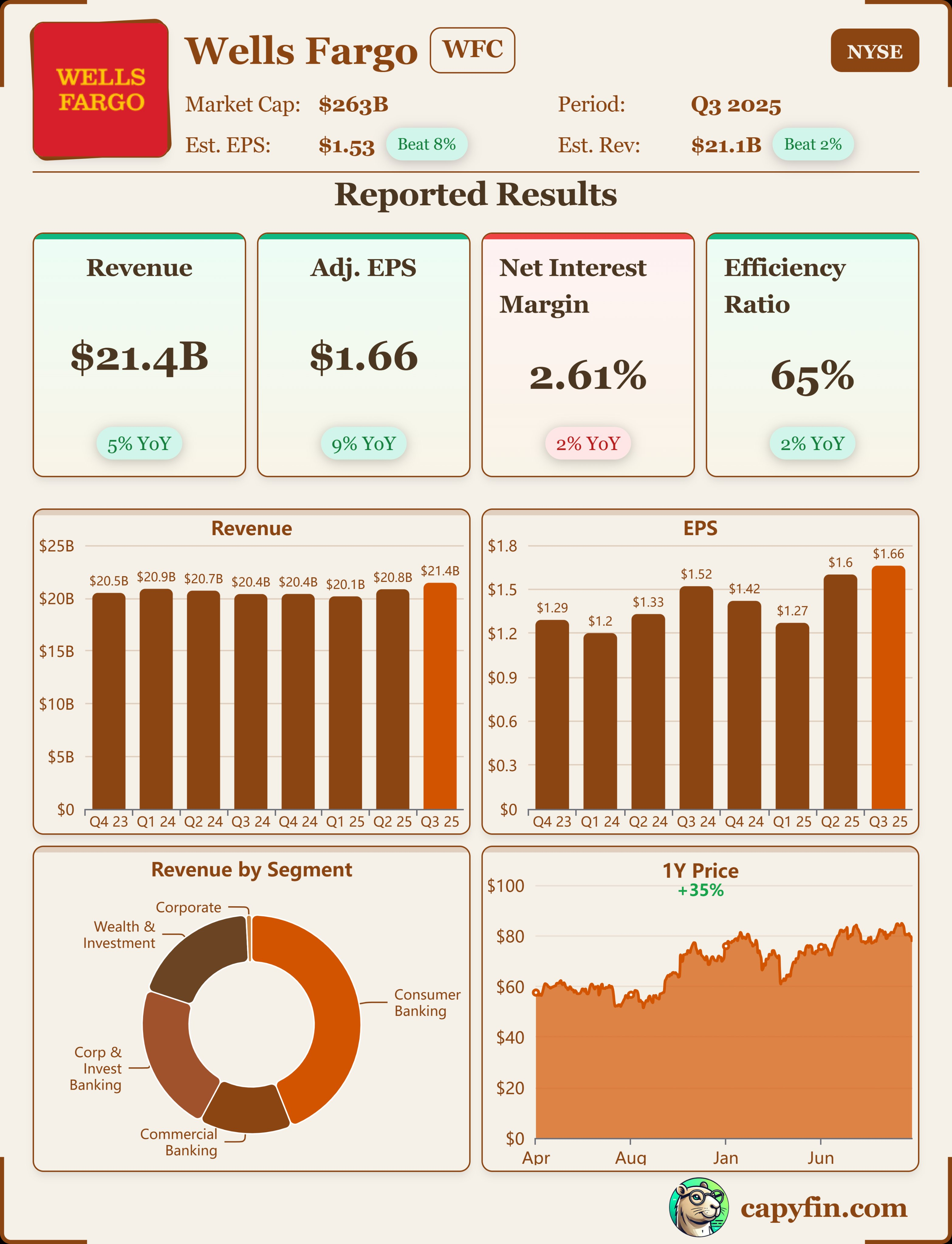
Performance remained stable and exceeded expectations. Q3 net profit reached $5.59 billion, with EPS at $1.66, while provision expenses decreased by approximately 36% year-over-year.
Net interest income improved. Following the removal of asset caps, the company expanded its loan portfolio, resulting in a sequential increase in NII and a significant improvement in loan spreads.
Credit quality has improved significantly. Provision reversals have released profit flexibility, and the non-performing loan ratio has declined.
ROE raised to 17%–18%. Management stated that the long-term target is now sustainable.
Wells Fargo enters a period of regulatory relief, with its earnings resilience being repriced. The near-term focus lies in maintaining stable credit quality and a compliant culture, while the medium term may see a return to steady growth driven by its deposit and loan base along with cost advantages.
(Image)
Divergence Amid Cyclical Recovery and "Rational Rebound"
Overall, the Q3 2025 financial reports of the Big Four banks reveal three major trends:
Investment banking and capital market recovery emerged as the primary drivers of profit rebound, with JPMorgan and Goldman Sachs benefiting significantly;
Proactive Management of Interest Rate Spread Contraction Risks, particularly as JPMorgan Chase proactively provided a 2026 net interest income (NII) "anchor" to stabilize market expectations;
Costs and AI Emerge as New Focus Areas —From JPMorgan's Pragmatic AI Approach to Goldman Sachs' Restructuring Layoffs, Banking's "New Efficiency Cycle" Is Unfolding.
From a valuation perspective, current valuations imply high growth expectations:
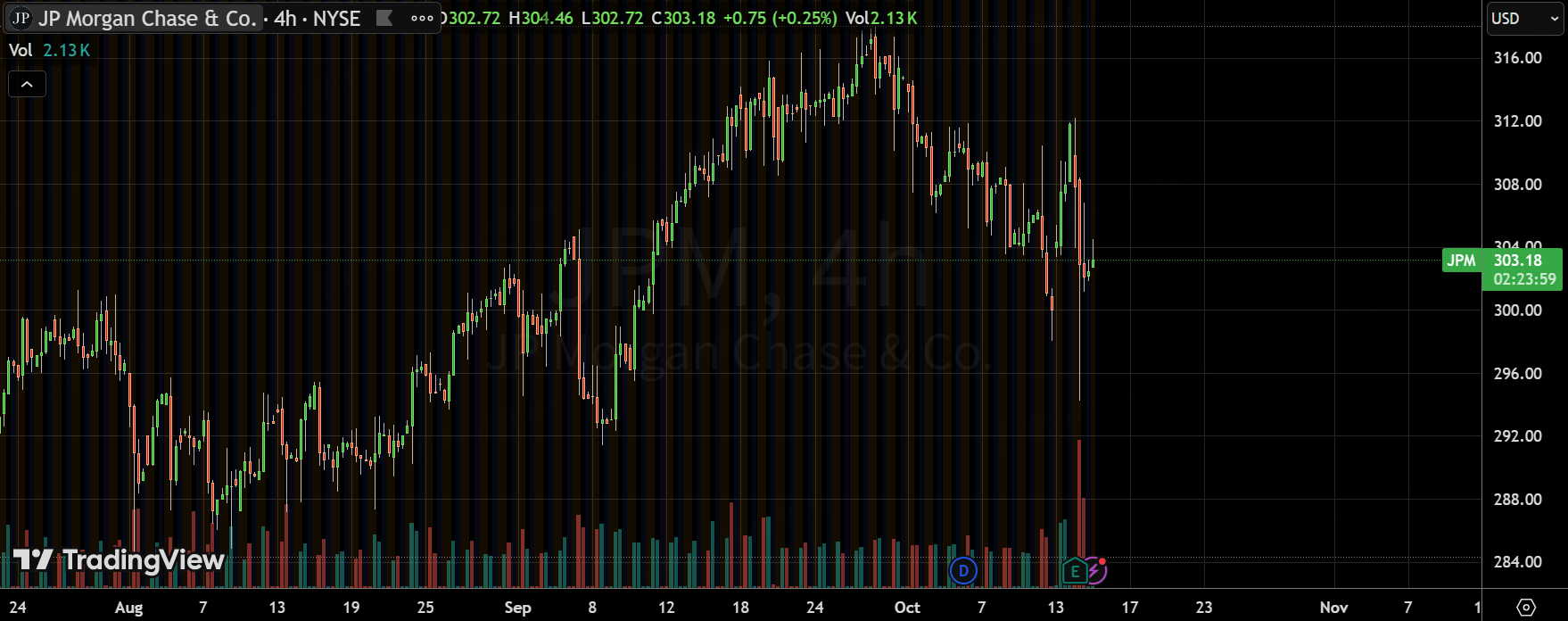
JPMorgan's P/E ratio stands at approximately 12 times (above the industry average of 10 times), implying 8-10% profit growth. However, its stock price fell 1.86% to $302.08 on October 14, potentially reflecting full market pricing and concerns over non-bank financial institution (NBFI) risks.
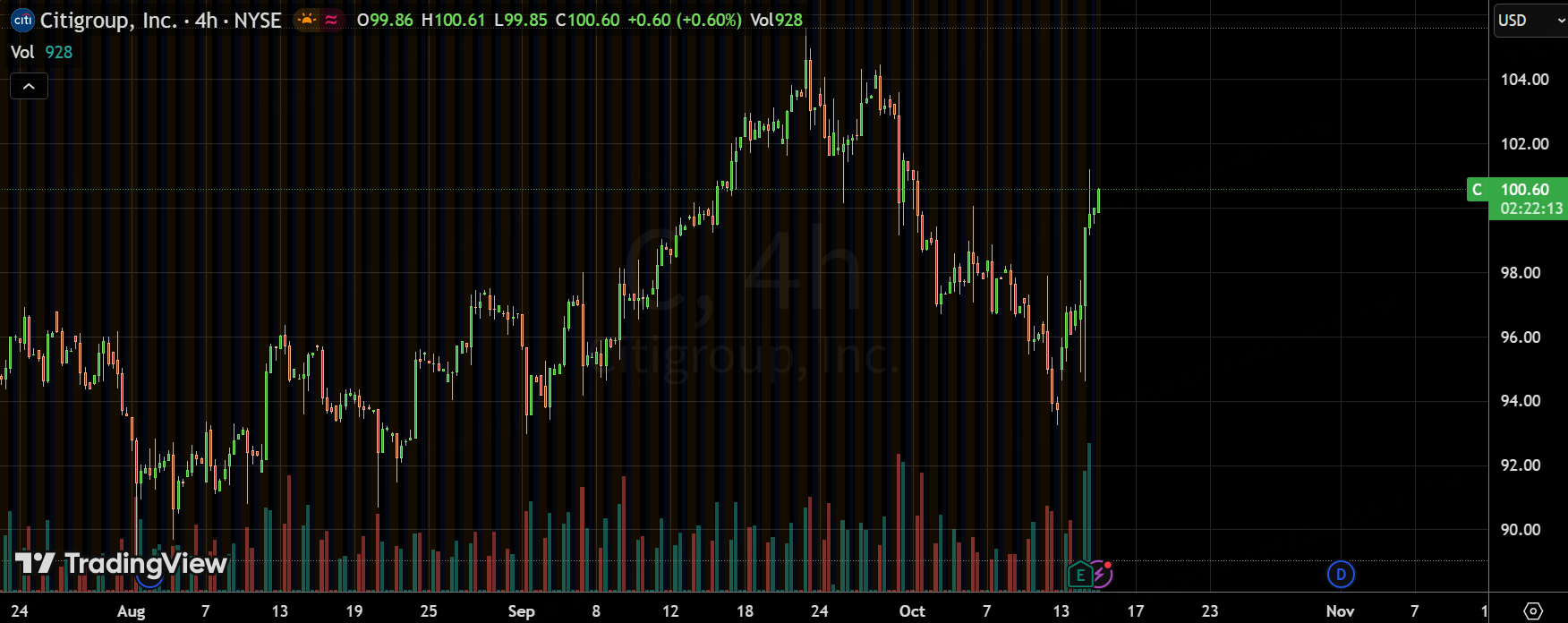
Citigroup trades at a P/E ratio of approximately 10 times, with its stock price rising 3.89% to $99.84. Compared to Bank of America (P/E 11 times), its transformation potential and AI-driven efficiency gains may be undervalued, particularly given the upside potential for its ROTCE target.
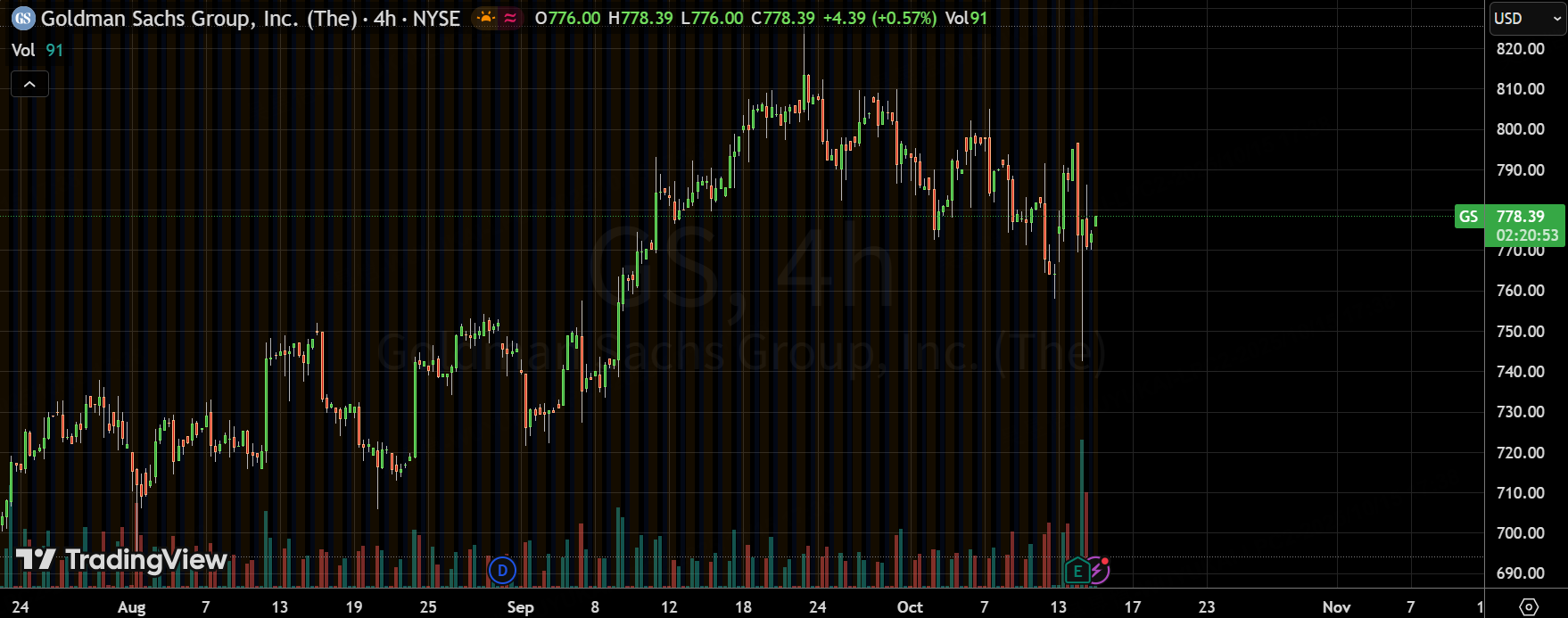
Goldman Sachs trades at a P/E ratio of approximately 14 times, with its stock price declining 2.04% to $770.76. This implies a continued rebound in investment banking activity, but could be overvalued if M&A activity slows. Compared to Morgan Stanley (P/E 13 times), its AWM growth is more stable.
Wells Fargo trades at a P/E ratio of approximately 13 times, with its stock price rising 7.15% to $84.56. Compared to JPMorgan Chase, its growth potential following the lifting of asset caps may be undervalued. Market disagreement centers on whether regulatory tail risks have fully dissipated.
From an investment perspective, JPM represents cyclical resilience and expectation management capabilities, GS is pure leverage for investment banking recovery, C is still in a transitional phase, and WFC is undergoing a post-regulatory era valuation reset. Short-term market volatility is inevitable, but long-term, the profitability of the banking system is shifting from a pure spread-driven logic to a new cycle fueled by "capital markets + AI-driven growth + fee discipline."
Disclaimer: Investing carries risk. This is not financial advice. The above content should not be regarded as an offer, recommendation, or solicitation on acquiring or disposing of any financial products, any associated discussions, comments, or posts by author or other users should not be considered as such either. It is solely for general information purpose only, which does not consider your own investment objectives, financial situations or needs. TTM assumes no responsibility or warranty for the accuracy and completeness of the information, investors should do their own research and may seek professional advice before investing.
- nizzmo·2025-10-15Love the insights! Excited for Q3 results! [Heart]LikeReport