


Is China's Demand Poised to Return, Triggering a Major Commodity Market Rally?
In the third quarter of 2025, the overall commodity market exhibited a range-bound volatility with a noticeably higher focus compared to the second quarter. However, internal market segments showed significant divergence. The precious metals sector shone brightly, with gold prices reaching new highs and becoming the market’s “star.” Base metals maintained a generally strong, stable trend, with copper prices holding firm at high levels. Conversely, energy commodities appeared relatively weak, primarily due to an oversupply.
Looking toward the fourth quarter, the most critical support factor is the absence of clear signs of economic recession in the United States. The Federal Reserve has initiated what the market calls a “risk-management style rate cut” in monetary policy. This preemptive rate cut strategy offers a favorable environment for commodity price rebounds. At the same time, fiscal policies in Europe and the U.S. lean toward expansion, which benefits overall demand growth. Although China’s domestic economic recovery momentum is comparatively weak, there remains policy space that could serve as a potential driver for demand release in the future. Currently, the commodity market is in a new inventory reduction cycle. Due to weak demand, price rallies have yet to start; however, if China’s demand improves markedly, commodity prices are expected to quickly enter an upward trend.
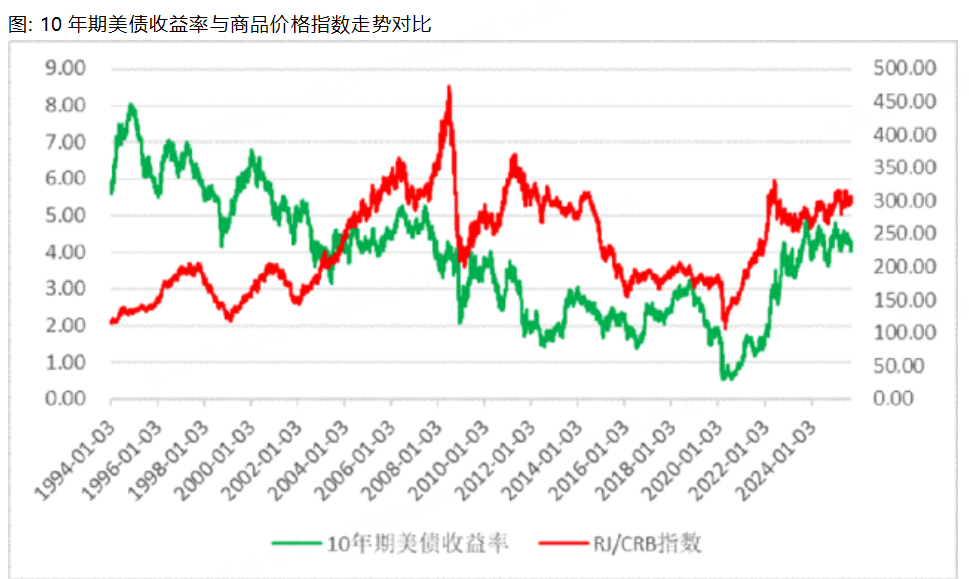
Regarding the Fed’s rate cut strategy, on September 17, 2025, the Federal Reserve reduced the federal funds rate by 25 basis points as scheduled, adjusting the target range to 4.00%–4.25%. Fed Chair Powell emphasized that this cut is a risk-management, precautionary measure aimed at preventing economic downturn risks rather than a response to inevitable recession conditions. While the U.S. economy has slowed, retail sales data in August showed a third consecutive month of 0.6% month-on-month growth, clearly exceeding expectations and indicating that although the economy has decelerated, it is far from entering recession territory.
Looking back to 1982, the Federal Reserve has undergone seven major rate-cut cycles, categorized as preventive or recession-driven. Rate cuts typically coincide with rises in unemployment and have only limited constraining effects on inflation. Historically, preventive rate cuts benefit precious metals and U.S. equities, with gold typically showing a pattern of “rise first, then fall.” Recession-driven cuts tend to harm equities but benefit gold. Copper and crude oil prices are more influenced by real economic performance, especially China’s economy. Regardless of rate cut type, as long as China's economy and commodity demand remain strong, copper and oil prices usually trend upward; otherwise, they decline.
Currently, the U.S. economy exhibits characteristics of “stagflation,” combining renewed Fed rate cuts with elevated inflation levels. Inflation pressure exceeds historical averages during rate cut periods, reflecting a slowed economy where the high-interest environment continues to suppress real estate and manufacturing development. Although the Fed’s dot plot indicates the possibility of two rate cuts within the next year, uncertainty in their magnitude and timing remains high due to discontinuity and rising inflation expectations. Notably, if President Trump influences Fed decisions via personnel appointments, rate cuts may intensify, exacerbating inflation rebound risks. Such a “cut first, then rise” monetary policy adjustment could echo the stagflation era of the late 1960s to 1970s, accompanied by generally rising commodity prices.
Domestically, despite August macroeconomic data showing weakness in both supply and demand, neither the A-share market nor commodity markets experienced sustained declines. The A-share market remained resilient, with demand-driven black building materials prices even rising. Internationally traded commodities such as non-ferrous metals and energy prices maintained a volatile range, with copper prices standing out as particularly strong, reflecting cautious optimism about future demand.
Specifically, domestic industrial output growth slowed to 5.2% year-over-year in August, mainly because shipment values turned negative year-over-year (-0.4%) for the first time, though this contraction may reflect seasonality. Meanwhile, high-tech industry output maintained a solid 9.3% growth rate, with increased production in new energy vehicles, power generation equipment, solar cells, metal-cutting machine tools, and industrial robots, indicating clear trends toward industrial transformation and upgrading. However, real estate, manufacturing, and infrastructure investment remain weak, with fixed asset investment dropping further by 6.3% year over year, including a -1.3% decline in manufacturing single-month investment, signaling decreased momentum for equipment renewal.
Overall, the global macro environment may be entering a “honeymoon period” where monetary easing and fiscal expansion work together. As long as the economy avoids deep recession, this environment is favorable for commodity prices. Unlike previous easing cycles, current conditions involve high inflation and Chinese policies aimed at capacity control, which alleviate supply-side pressures and help mitigate negative impacts from weak demand. Although supply expansion and specific trade policies may cause weaker performance for crude oil and agricultural products, the overall easing policy environment will likely limit declines in these categories. Market participants can use futures strategies, such as selling near-month contracts and buying far-month contracts, to manage price volatility risks.
$E-mini Nasdaq 100 - main 2512(NQmain)$ $E-mini S&P 500 - main 2512(ESmain)$ $E-mini Dow Jones - main 2512(YMmain)$ $Gold - main 2512(GCmain)$ $WTI Crude Oil - main 2511(CLmain)$
Disclaimer: Investing carries risk. This is not financial advice. The above content should not be regarded as an offer, recommendation, or solicitation on acquiring or disposing of any financial products, any associated discussions, comments, or posts by author or other users should not be considered as such either. It is solely for general information purpose only, which does not consider your own investment objectives, financial situations or needs. TTM assumes no responsibility or warranty for the accuracy and completeness of the information, investors should do their own research and may seek professional advice before investing.
- Jo Betsy·2025-09-28Trump’s Fed influence risks more cuts—will that spark broad commodity spikes?LikeReport
- Megan Barnard·2025-09-28Gold’s “rise then fall” history—does current stagflation break that pattern?LikeReport
- Wade Shaw·2025-09-28Stagflation + rate cuts = gold’s dream run—its rally might outlast past cycles!LikeReport
- MortimerDodd·2025-09-26Absolutely insightful analysis! [Applaud]LikeReport