


Tech Weekly: Gemini 3 Triggers AI Realignment and Market Strategy Adjustments
Week after week, the AI technology investment landscape is undergoing unprecedented rapid transformation, akin to the time dilation scenes in Interstellar—where one hour in tech investing equates to seven years in the $S&P 500 ETF (SPY)$ market. The launch of Gemini 3 has become a pivotal event recently shaking up the AI industry, not only reshaping the competitive landscape but also compelling investors to reassess market logic and strategic positioning.
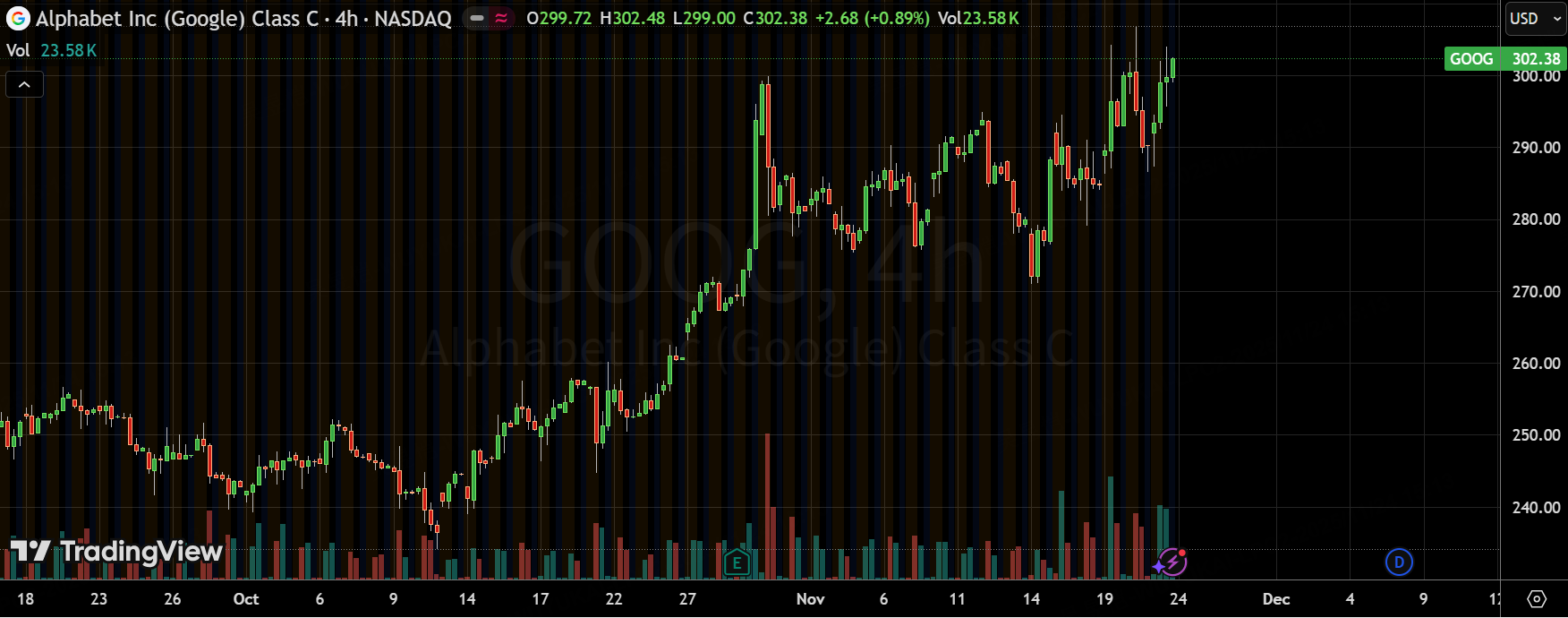
Gemini 3 Reshapes the AI Competitive Landscape
The launch of Gemini 3 marks the AI industry's official departure from its previous phase of homogeneous competition, ushering in a new era of differentiated competition. This model delivered outstanding performance in benchmark tests, with exceptional efficiency in backend task processing. It demonstrated significant advantages particularly in multimodal domains. Leveraging the vast data resources of YouTube, owned by Google (GOOG), its leading position in image generation and video creation is poised to expand further.
For ordinary consumers, the core functional differences between Gemini 3 and ChatGPT 5.1 are not readily apparent. ChatGPT's established user loyalty, accumulated chat history, and ingrained operational habits—built through its first-mover advantage—make it difficult to displace in the short term. This also reflects that functional improvements in conversational large language models are entering a plateau phase. However, professional user groups are beginning to show signs of migration. Some users report that Gemini 3 Pro offers superior speed and responsiveness, with plans to shift more workloads to the upcoming Gemini Deep Think.
However, Gemini 3 is not without flaws. Its hallucination rate is significantly higher than ChatGPT 5.1, and it still lags behind Claude and ChatGPT 5.1 in code agent performance. Furthermore, its current usage limits are relatively low. Furthermore, the model currently lacks a viral tipping point. However, the launch of Nano banana Pro and the upcoming release of the next-generation video model Veo4 hold promise. Leveraging the inherent viral potential of image and video content, these developments could disrupt existing user habits and drive substantial incremental traffic growth.
OpenAI's Strategic Dilemma and Potential Transformation
Gemini 3's aggressive entry has placed OpenAI in a dilemma. Continuing to directly compete with Google on multimodal consumer-grade features would undoubtedly lead to a protracted battle with little chance of victory—Google's infrastructure advantages are nearly insurmountable, and the multimodal domain is fundamentally a race based on marginal costs. Abandoning the multimodal track to pivot toward Anthropic-style enterprise-level inference services, however, risks user attrition and diminished advertising monetization capabilities.
Another challenge for OpenAI stems from Google's ecosystem integration advantage. Gemini is progressively integrating into Google's suite of products used daily by billions of users—including Search, Gmail, Workspace, and the Android operating system. The focus of AI competition has shifted from "who has the smartest chatbot" to "who offers the most comprehensive workflow integration capabilities." Google currently holds the upper hand in both areas.
Regarding monetization pathways, OpenAI's advertising model remains fraught with uncertainties. An interview with OpenAI executive Fidji Simo by Wired revealed no mention of advertising strategies in her responses, sparking market doubts about the model's maturity. Unlike traditional search engines' "blue link" ads with near-zero marginal costs, advertising within AI chat interfaces faces a fundamental dilemma: "advisor vs. billboard." Any ad that distorts facts or disrupts conversational flow risks severely undermining user trust. Even if OpenAI plans to combine contextually relevant ads with deeply personalized targeting, how to achieve commercial conversion without compromising user experience remains to be proven in practice.
Potential future transformation directions for OpenAI include shifting its R&D focus toward model efficiency optimization to develop smaller, faster GPT-5-level intelligent models capable of running locally on mobile devices, or deepening its penetration into the enterprise market to build a high-end intelligent service layer. However, regardless of the chosen path, talent attrition (with multiple multimodal experts moving to Meta's MSL) and resource allocation issues will remain critical constraints.
Market Reaction and Investor Strategy Adjustments
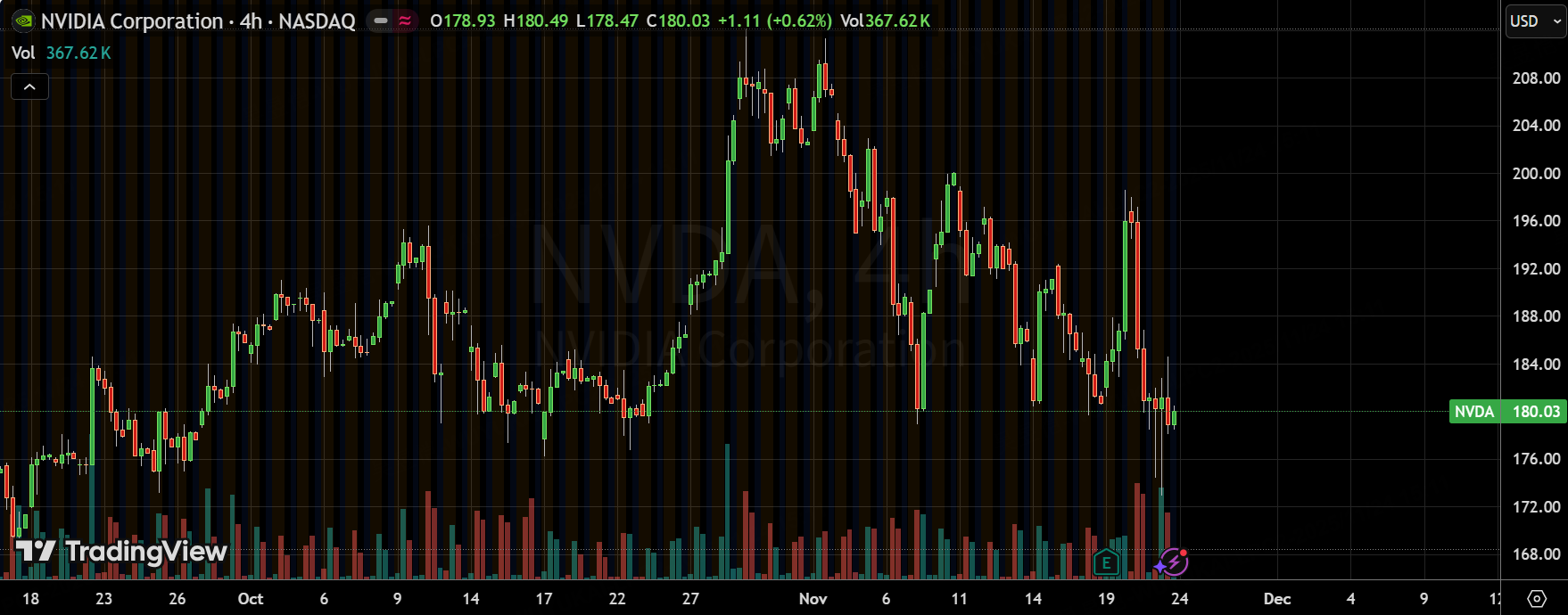
The launch of Gemini 3 triggered a chain reaction in the market. The sell-off in AI infrastructure stocks following Nvidia's earnings report directly reflects investors reassessing industry risks. The market is currently in a phase of digestion and recalibration after the narrative shock, beginning to price in the possibility of Google dominating the large language model market.
Investors are universally facing the challenge of cognitive restructuring. The market has yet to reach a consensus on issues surrounding ChatGPT's user stickiness sustainability, the impact of multimodal competition on the AI infrastructure sector, and OpenAI's strategic pivot. This uncertainty is also reshaping industry valuation logic. The narrative of "continuously scaling computing power" that underpinned Nvidia's 30x valuation multiple faces growing skepticism due to Google's external promotion of TPUs, $AMD's more competitive product pipeline by 2026, and the trend toward enterprises developing their own ASIC chips. However, based on current pricing, $NVIDIA (NVDA)$ still commands a 20x forward P/E ratio for 2026 and is viewed as retaining investment value.
In terms of investment strategy, most investors are opting to reduce both total and net exposure in their short- and medium-term portfolios, focusing instead on individual stock opportunities with near-term catalysts and tactical trades. Recent market phenomena—including record-high short selling volumes in short-term ETFs, near-historic levels of put option trading on the S&P 500, and oversold conditions in Nasdaq index constituents—all indicate that market panic sentiment has reached extreme levels. Any positive catalyst could trigger a sharp short-covering rally.
Regarding specific targets, in short-term tactical trading, $Amazon (AMZN)$ (benefiting from the Black Friday Cyber Monday shopping season and the Re-invent conference, with improved retail data), $Shopify Inc (SHOP)$ (with improved third-party metrics and BFCM catalysts) are favored for combining long-term fundamentals with near-term catalysts; From a medium-to-long-term perspective, Shopify's smart agency narrative remains clear. Software infrastructure stocks like $Snowflake(SNOW)$ and $MongoDB Inc.(MDB)$ are poised to benefit continuously from evolving industry dynamics.
Industry Outlook and Key Variables
The pace of transformation in the AI industry continues to accelerate, with competition in the multimodal domain emerging as the future battleground. Model efficiency, ecosystem integration capabilities, and commercialization outcomes will be pivotal in determining corporate success. Leveraging its dual strengths in multimodal technology and ecosystem development, Google is poised to maintain its leadership position. OpenAI's strategic choices will directly shape the competitive landscape, with its user growth trajectory, model iteration speed, and progress in advertising monetization serving as the three core indicators for assessing its future prospects.
$Meta Platforms, Inc.(META)$'s capital expenditure strategy also warrants attention. Despite mounting pressures from the AI arms race, Zuckerberg has explicitly stated his willingness to invest hundreds of billions of dollars in this competition, potentially redirecting more funds toward the advertising recommendation model GEM to enhance return on investment. Additionally, events such as the outcome of the Federal Reserve meeting on December 10, Black Friday Cyber Monday (BFCM) retail data performance, and the White House's Genesis Mission announcement could all serve as short-term variables influencing market trends.
In this rapidly evolving AI wave, investors must maintain exceptional cognitive flexibility, promptly update existing judgments, and approach uncertainties with an open mindset. By 2026, the AI industry will witness further transformations and opportunities. Those who can accurately grasp industry trends and flexibly adjust strategies are poised to seize the initiative in this wave of change.
Disclaimer: Investing carries risk. This is not financial advice. The above content should not be regarded as an offer, recommendation, or solicitation on acquiring or disposing of any financial products, any associated discussions, comments, or posts by author or other users should not be considered as such either. It is solely for general information purpose only, which does not consider your own investment objectives, financial situations or needs. TTM assumes no responsibility or warranty for the accuracy and completeness of the information, investors should do their own research and may seek professional advice before investing.
- Mortimer Arthur·2025-11-25Today was not real buying, it was short covering. The sooner you realize that the better off you will be. Up volume today was half the down volume of last Thursday. You've been warned.LikeReport
- zingie·2025-11-24Gemini 3's impact is huge, but META's spending plans are a real game-changer. Thoughts? [吃瓜]LikeReport
- Valerie Archibald·2025-11-25Is that the Christmas rally, or a bull trap? That is the question. I'm leaning towards the bull trap.LikeReport